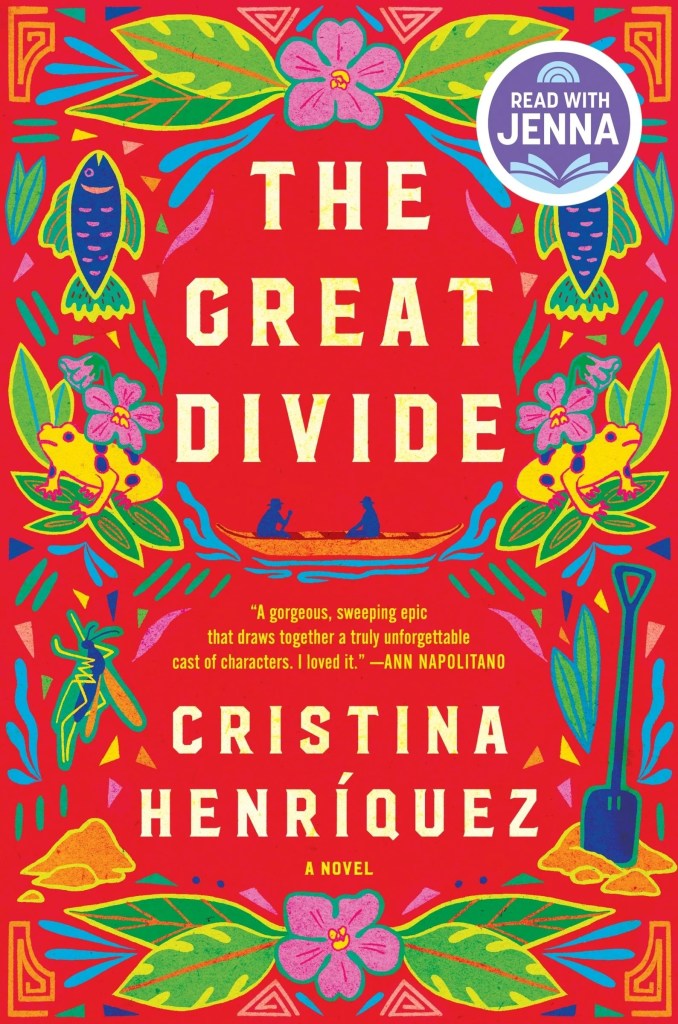
The Great Divide by Cristina Henríquez
This historical novel is set in 1907 in Panama and Barbados, during the building of the Panama Canal. It takes a while for the varied characters to have their stories connect, but individually they are interesting and the connections are intriguing. Fisherman Francisco Aquino sells the fish he catches to Joaquín. Francisco’s son Omar doesn’t like being out on the water. His mother apparently drowned many years ago. Omar goes to work on the canal, to the disapproval of his father. They don’t speak anymore, just eat dinner together then go to sleep. When Omar doesn’t come home for a few weeks, Francisco worries, but isn’t sure what to do.
Joaquín resells the fish she buys from the fisherman. His wife Valentina and her sister grew up in the town of Gatún, which is to be moved for the canal. Valentia takes Joaquín to Gatún for a visit, and wants him to start a protest.
The working conditions on the canal are terrible, though the men are made to take quinine to try to prevent malaria. Omar gets malaria anyway, and collapses. He is helped by Ada and a doctor. Ada Bunting, 16, comes from Barbados. She is looking for work in Panama because her sister needs expensive medical treatment. They grew up in a house that her mother had moved when she was a baby. Ada’s mother is a seamstress and dress designer. The doctor, John Oswald, is impressed by Ada, and hires her to tend his wife Marian, who is ill.
Eventually Omar returns home to his silent but very relieved father. There are more characters and plot twists, but the focus is on the canal and how it is affecting the workers and the villagers. I really enjoyed Henríquez’s contemporary novel The Book of Unknown Americans. The Great Divide is a compelling read, but not as memorable as I’d hoped. This is a Read with Jenna selection.
Brenda
 Book Girl & Little Bear