Emily Wilde’s Map of the Otherlands

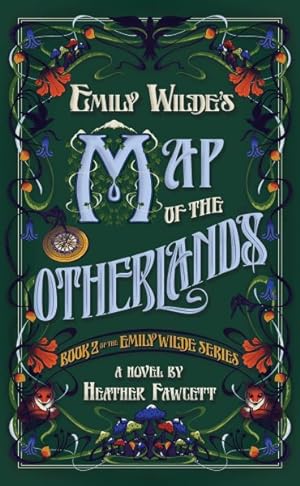
Emily Wilde’s Map of the Otherlands by Heather Fawcett

Book 2 of the Emily Wilde Series

Cambridge dryadology scholar Emily Wilde is off to the Alps with Wendell Bambleby, her colleague who is heir to a fairy kingdom, now ruled by his stepmother. Accompanying them are Ariadne, Emily’s talkative niece and a student at Cambridge, Shadow who’s sort of a dog, and senior scholar Farris Rose. Fox-like little faerie creatures appear, both vicious and helpful, along with faithful brownie Poe and his magical bread. Wendell has a magical scarf for Ariadne and a cape for Emily, but is weakened when he does magic, probably due to poison.

The group are in the Alps looking for a door to Wendell’s kingdom, and to search for two long-lost wanderers who haunt the nearby village. There are many adventures, in and out of faerie lands, and a cat named Orga is introduced. Prickly Emily very gradually becomes close to Ariadne and Rose, and considers a request from Wendell.

I enjoyed this portal fantasy even more than Book 1, Emily Wilde’s Encyclopaedia of Faeries, mostly because of the ensemble cast, and partly because Emily is becoming a more appealing character. This novel is definitely not a cozy fantasy, but is vividly written, and a compelling story. More adventures are planned.

Brenda
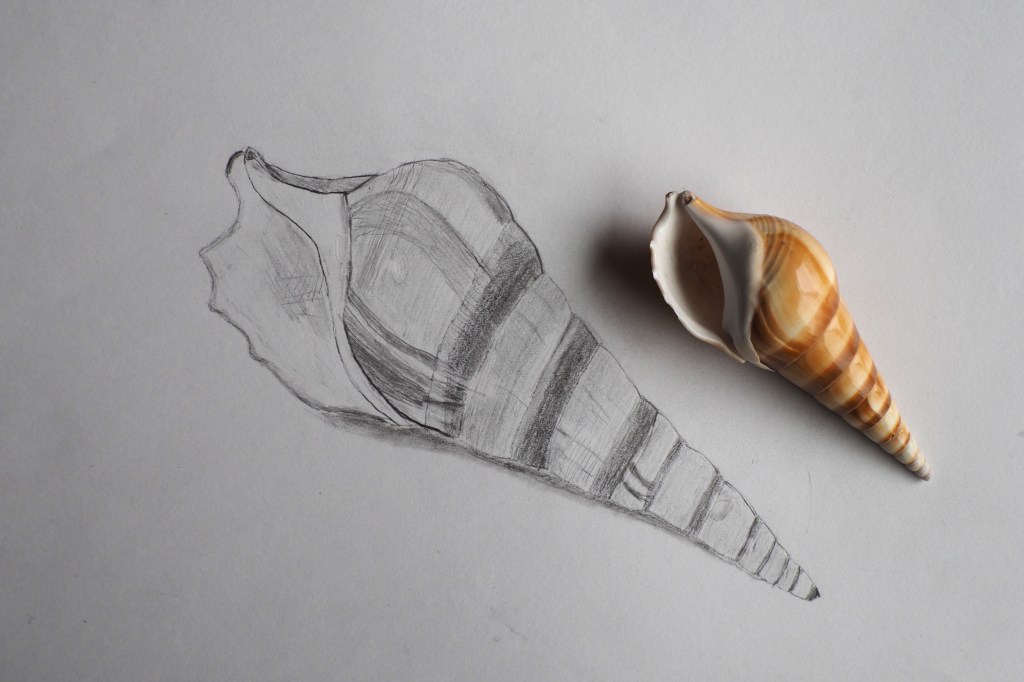
Shell Drawing

I have some book reviews not quite ready to post, so here’s my larger than life-size drawing of a shell, in graphite pencil. I took a Learning to Draw Nature class recently, and have acquired a collection of graphite and colored pencils. It’s fun to plan what to draw next, while it’s hard to decide when a drawing is finished.

Brenda

The Kamogawa Food Detectives

The Kamogawa Food Detectives by Hisashi Kashiwai, translated by Jesse Kirkwood

I enjoyed this short, engaging novel of six connected stories, a bestseller in Japan. The stories are set in Kyoto, which is fondly described, with mentions of notable tourist sites such as the Higashi Hongangi Buddhist Temple. Weather and seasons are highlighted, including cold winter breezes from the surrounding mountains, many rainy days, and the stunning beauty of the spring Cherry Blossom Festival. But the focus of the novel is the Kamogawa Diner, and the small detective agency, both run by retired police officer Nagare Kamogawa and his daughter Koishi, in her 30s. The diner, with four tables and 5 seats at the counter, is hard to find, but always smells enticing.

Other than some regular customers, most diners are clients seeking a nostalgic dish from long ago. Koishi interviews them, then Nagare travels throughout Japan to source ingredients, search for chefs or customers of closed restaurants, and finds long-lost relatives and friends in search of the desired recipe and ambience. Two weeks later, the clients return for their requested meal, and a story, along with greetings from friendly cat Drowsy. The food is lovingly detailed, and isn’t all traditionally Japanese. Among the requests are Napolitan Spaghetti with frankfurters, eaten by a 5-year-old girl on a trip with her grandfather, a widower looking for his wife’s secret recipe, and a favorite meal for a loved one who is ill. This charming novel is a very good rainy-day comfort read. In Japan, the book has seven sequels. The first sequel, The Restaurant of Lost Recipes, will be published here in October. Enjoy!

Brenda

Hudson Bay Bound

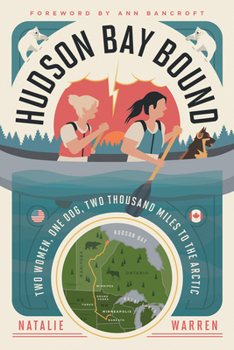
Hudson Bay Bound: Two Women, One Dog, Two Thousand Miles to the Arctic by Natalie Warren

In 2011, two Minnesota college seniors made a bold plan for the summer after graduation. Ann Raiho and Natalie Warren decided to canoe 2,000 miles from St. Paul, Minnesota to Hudson Bay in Manitoba, which had never been done by women. Natalie grew up in Miami, but went on long canoe trips in the Boundary Waters area of northern Minnesota as a teen, where she met Minnesotan Ann. They found out they were both planning to attend St. Olaf College in southern Minnesota, as I did, though quite a few years earlier. They were very experienced at long canoe trips, though always with a larger group. Planning and funding such a big expedition was challenging. Natalie had no firm plans or job offers after graduation, while Ann was due in Colorado in early September for graduate school.

At the beginning of June, 2011, they headed out on the flooded Minnesota River, traveling past many fields of corn and soybeans, ready for adventure. Three resupplies were planned, one with the help of Ann’s parents. Traveling through Minnesota, North Dakota, and Manitoba, they met a wide variety of farmers, villagers, and First Nations people. Along the way they saw deer, moose, caribou, eagles, wolves, beaver dams, black bears, many mosquitos and flies, and near journey’s end, polar bears. Also, they adopted a stray dog, Myhan, recommended for polar bear country.

There was lots of cribbage, music from ukelele and a travel guitar, dancing, very few showers, at least one day of not speaking, and many granola bars and pancakes. Ann had the idea for the journey, and Natalie was happy to go along, up rivers, through the vast Lake Winnipeg, and amazing scenery. Natalie sang jazz standards (which ones?) when nervous, which irritated Ann, who thought Natalie wasn’t serious enough about safety. Natalie, in turn, thought Ann made too many decisions without asking for Natalie’s input. Many rapids and portages made for an occasional grueling adventure. They got physically stronger during their 100-day journey, and their friendship survived, and even thrived. For photos and videos, visit Natalie’s website here.

Brenda

The Mimicking of Known Successes

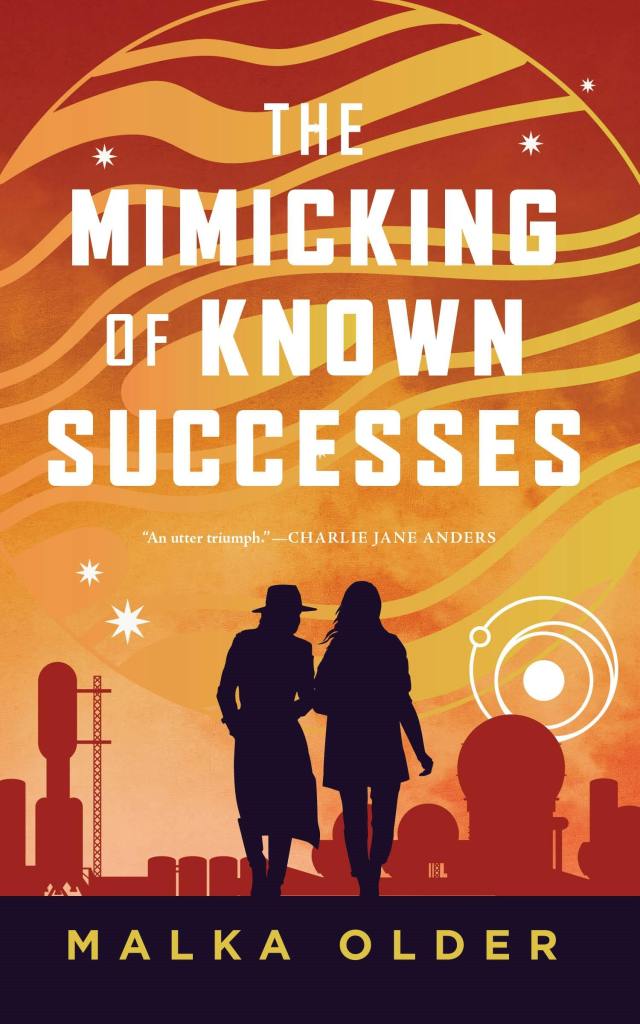
The Mimicking of Known Successes by Malka Older

I am amazed by Malka Older’s remarkable world-building with memorable main characters in just 166 pages. Mossa is an Investigator, looking into a missing person report from a tiny frontier train stop. A pub owner nearby grows and cooks excellent green beans, but there seems to be no other reason for a stranger to visit. Did the man fall of the train platform, jump, or was he pushed, and why?

Tracing the unnamed man to the university city of Valdegeld, Mossa reconnects with Pleiti, her former college sweetheart. Pleiti is a Classics scholar, with her own small suite of rooms. When the missing person is identified as a fellow scholar Pleiti dislikes, she provides introductions to various scholars for Mossa, before the pair tour a zoo. At the zoo, Mossa is attacked by a caracal, a wild feline. As Pleiti continues to help Mossa with the case, they slowly reconnect. The exciting investigation, including some train journeys, culminates at a spaceport. Besides the spaceport, what makes this novella science fiction? It’s set on artificial rings around Jupiter, known as Giant, and the classics Pleiti studies are old Earth books. The goal of the Classics scholars is to recreate Earth’s ecosystem, with authentic plants and animals, on the currently desolate home planet.

Summarized by the publisher as a Gaslamp mystery, this book could be described as a late Victorian style community in an alien setting, with atmospheric storms and chilly winds which make tea shops, hot soup, and gas fireplaces very inviting. I’d love to see drawings of life on Giant, especially the atmoscarfs worn outdoors. A sequel, The Imposition of Unnecessary Obstacles, has just been published, and is high on my pile of books to read. Readalikes include The Spare Man by Mary Robinette Kowal, and books by Becky Chambers.

Brenda

Atlas of a Lost World

Atlas of a Lost World: Travels in Ice Age America by Craig Childs

In this engaging combination of armchair travel and popular science, author Childs gives readers a glimpse into the Americas during the last Ice Age, from about 30,000 to 11,000 years ago. In his travels across the Americas, especially Alaska, to explore key archeological sites, he travels alone or with assorted companions, including his mother, archeology students and their professor, and his two children. He kayaks in the north Florida swamps, camps overnight in below zero temps and on the way to Burning Man in the Black Rock Desert, finds mammoth footprints in the American West, and meets with scientists and Native scholars.

A number of questions are considered, not all of them answered. When and how did people arrive in the Americas? Did they walk across the Bering land bridge, and/or journey in skin boats along the coast? Did some people come from Iberia, now Portugal and Spain? What large animals did they encounter, and what did they eat? How did they travel during expanding and receding glaciers, and during sea rise? Tools and weapons were made from materials that were routinely carried for hundreds of miles, which indicated travel and trade. Mammoths and mastodons were common, then rare, and finally extinct as the climate changed. What was the significance of a mammoth hunt during different eras? Childs visits deserts, cliffs, caves, rivers, and coasts, describing how they look now, and what they probably looked like 11,000 to 25,000 years ago to early human travelers. Lots of research, amazing travels, and compelling writing make for a very appealing read. The illustrations by Sarah Gilman enhance the reading experience.

Readalikes include The Sun is a Compass by Caroline Van Hemert, Hudson Bay Bound by Natalie Warren, The High Sierra by Kim Stanley Robinson, and The River: A novel by Peter Heller.

Brenda

Astronauts in Orbit: Two Books

The Six: The Untold Story of America’s First Women Astronauts by Loren Grush

The NASA astronaut candidates of 1978 included six women who would all fly in near-earth orbit on the four space shuttles, before the construction of the International Space Station. The lengthy application and testing process is described in detail, along with the long wait to be selected for a space shuttle crew. Sally Ride became famous as the first American woman to orbit the earth, while Judith Resnick was better known for her second, ill-fated flight, on board Challenger in January, 1986. Sally was named to the the committee which investigated the Challenger disaster. Some information about the six was new to me, especially the stories of two women physicians, Anna Fisher and Rhea Seddon, who became pregnant and gave birth while waiting their turn to fly in space, and worked very close to their due dates and returned to work soon after. The six women, faced extra challenges due to their gender in a very male-dominated field, and added pressure from the media. This was great to read alternately with Orbital. Readalikes include The Mercury Thirteen by Martha Ackmann, Handprints on Hubble by Kathy Sullivan, and the novel The Calculating Stars by Mary Robinette Kowal.

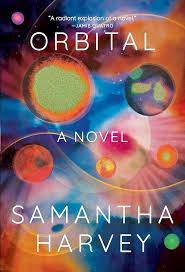
Orbital by Samantha Harvey

This beautiful, lyrical novel set a few years from now is a very memorable read, and will likely be nominated for multiple awards. It’s also short, and covers a single twenty-four hour day on the International Space Station. Four astronauts and two cosmonauts, from five countries, are several months into their overlapping nine-month stays on the station. The sixteen daily orbits around the planet reveal the beauty of the planet, the skies, and one massive typhoon heading for the Philippines, where Pietro and his wife met a fisherman and his family on their honeymoon. Chie learns that her mother has died in Japan. Their tedious daily exercise and tightly scripted work days contrast with the absolutely amazing sights including multiple sunrises, shared dreams, and relationships among the crew, their found family. The day described is also notable for another launch into space. Good Morning, Midnight by Lily Brooks-Dalton is a readalike for this excellent novel.

Brenda

The French Art of Living Well

The French Art of Living Well: Finding Joie de Vivre in the Everyday World by Cathy Yandell

While not French herself, the author has a good idea of French life and what makes it special. Beginning at age 19, Cathy Yandell has made so many visits to France, mainly to Paris, that she’s lost count. Her two daughters attended school in Paris during three different years, and she’s accompanied many student groups to Paris, as well as doing research in France. Yandell is a professor of French language, literature, and culture at Carleton College in Minnesota. Also, not mentioned in this book, she’s been knighted by the French government.

Yandell shares many observations about how the French have a unique perspective on life. Her friends and acquaintances, many of them from French-speaking African countries, seem to take more time to savor life, from meals, coffee, walks, visiting museums and parks. Sometimes it’s about enjoying the moment with others, even strangers. During the pandemic, the French government greatly increased funding of arts and culture, resulting in numerous outdoor concerts and other entertainment in the summer of 2021, when Yandell was staying in Paris. She shares the experience of a special afternoon in a Paris park, listening to an actor read fiction aloud.

Lengthy Christmas and wedding feasts are described, although this is not a foodie memoir of France. Time at a traditional hammam, relaxing in the waters with a couple of women friends, is another happy memory. World Cup soccer, watched on TV in a bar, helped unite people. French literature, art, and philosophy are discussed, as well as the challenges of parenting a toddler in Paris. Yandell doesn’t strive to be French, but clearly loves the extended time she has spent there, adding up to several years over the past couple of decades. This is a pleasurable, leisurely read. Readalikes include The Good Life series by British expat Janine Marsh, especially My Four Seasons in France, and the novel Lucy Checks In by Dee Ernst.

Brenda

Eva Evergreen, Semi-Magical Witch

Eva Evergreen, Semi-Magical Witch by Julie Abe

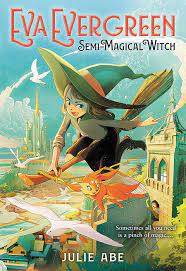
I really enjoyed this cozy fantasy marketed for ages 8-12. Eva (short for Evalithimus) Evergreen, 12, is an apprentice witch, taught by her mother, a grand-master. Eva doesn’t have much magic; casting a couple of spells makes her sleepy. She has one month to help a town, have the town mayor approve her work, and fly back to the city on her broom.

On the train to the coast, Eva acquires a magical pet flamefox named Ember. Mischievous Ember chews on Eva’s broom, causing Eva lots of stress, but this scene is funny for the reader who’s seen the book jacket where Eva is flying on the broom. Eva’s Semi-Magical Repair booth in Auteri shows her skill at combining a little magic with creative and practical skill to solve small problems and delight the young children at a nearby orphanage. Eva’s dad, who’s non-magical, often sends care packages with Japanese sweets, which Ember also enjoys.

Late in the month, a terrible storm approaches Auteri from the sea. Eva’s mom isn’t allowed to come and help until the month is up. Can Eva and her newly repaired broom save the town with the help of a few new friends? This is an absolutely charming cozy fantasy. Happily, there is a sequel, Eva Evergreen and the Cursed Witch. Readalikes include Kiki’s Delivery Service by Eiko Kadono (and I just learned there’s an animated film adaptation by Hayao Miyazaki), and The Tea Dragon Society by Kay O’Neil. An older children’s fantasy novel I’ve also enjoyed is The Little Broomstick by Mary Stewart.

Brenda