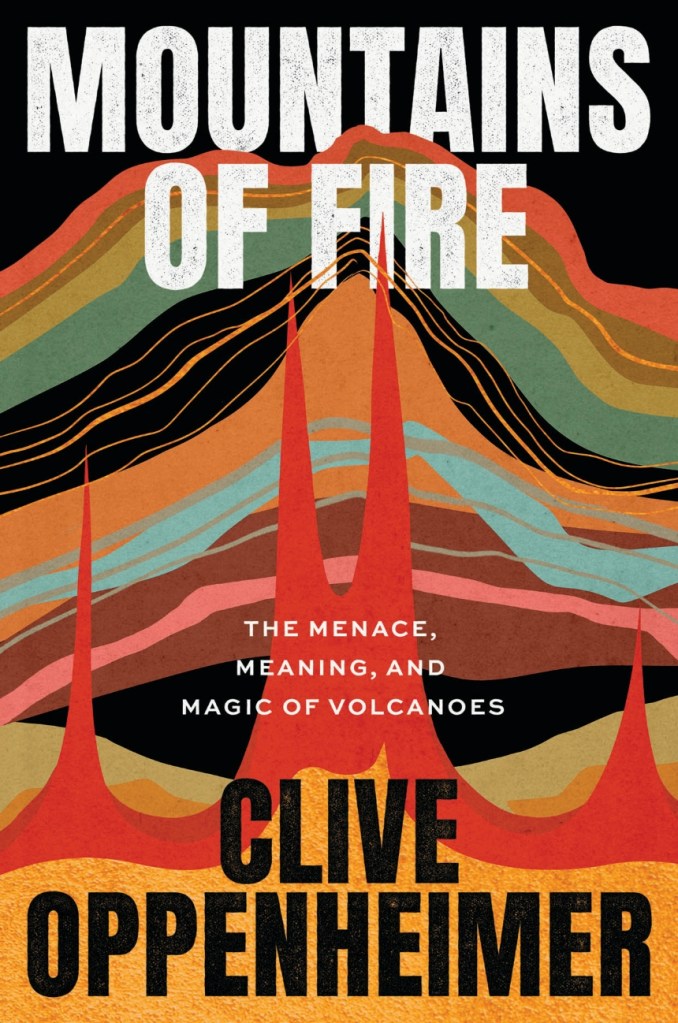
Mountains of Fire: The Menace, Meaning, and Magic of Volcanoes by Clive Oppenheimer
I was fascinated by this compelling mix of science, history, volcanoes, and real-life adventure. Unlike other books about volcanoes, only part of this one focuses on disastrous volcanic eruptions. The author, a professor of volcanology at the University of Cambridge, learns and shares about the challenges of timing an evacuation order, which is very costly, especially since a volcano could erupt off and on for more than a year. He also shares that volcanoes add to their environment; they’re not just destructive. The volcanoes even seem to have different personalities.
Clive has explored volcanoes in Antarctica, the Sahara Desert, North Korea, the Mediterranean and the Caribbean, and Iceland, and gives a good sense of place during each expedition, the instruments used to measure volcanic gases and how they’ve changed (his specialty). Repeated visits to volcanoes in North Korea and Antarctica are especially meaningful to him. When younger and less experienced, he took some risks that he learned from. Historical expeditions to volcanoes are described, as well as volcanoes in myth and legend. Prehistoric tools found near volcanoes, especially those made from volcanic obsidian, intrigue him.
This is a captivating and engaging study of volcanoes, and the author clearly wants to share the joy and wonder of his work. For glimpses of the sights and sounds of several volcanoes, see The Living Earth, a short unnarrated documentary Clive made in 2022, here.
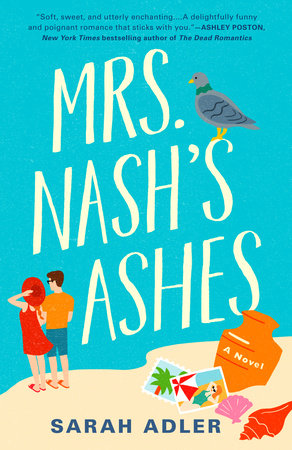
This book’s title is quite unusual for a rom-com road trip novel. Thwarted when their flight from Washington to Miami is cancelled, acquaintances Millie and Hollis agree to drive south together, on a journey that takes much longer than expected. Millie, short for Millicent, is delightfully weird, and loves 80s music and movies. Due to a TV role as a kid and young teen, she was a minor celebrity growing up. She is taking some of the ashes of her elderly friend Rose Nash to Key West, where Rose’s World War II sweetheart, Elsie, is in declining health in a nursing home.
Some familiar rom-com tropes are used, especially when Hollis and Millie are stuck in a small town in South Carolina for car repairs and the last vacant room in the local bed and breakfast has only one bed. The characters are not cookie-cutter stereotypes, or even always likeable. Hollis, a writer on his way to Miami for an annual fling, is annoyed by Millie’s taste in music and is often grumpy, but is supportive when the redhead is asked to ride in a parade while they’re stuck in Gadsley, South Carolina. Millie has trust issues, but is fascinated by Hollis, especially his different colored eyes, while Hollis avoids serious relationships, afraid of heartbreak. They become friends, then lovers, but fight the notion of love and happily ever after. Rose and Elsie’s past relationship is slowly and charmingly revealed. This banter-filled first novel is poignant, funny, and quirky, and is an engaging read. I would have liked more Key West atmosphere and description, but this story is mostly about the journey, not the destination. Books by Jennifer Crusie and Talia Hibbert are readalikes.
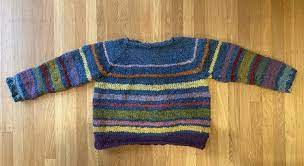
Unraveling: What I Learned About Life While Shearing Sheep, Dyeing Wool, and Making the World’s Ugliest Sweater by Peggy Orenstein
Craft, history, and memoir combine in the story of a writer in Northern California in 2020. Happily, this is not a memoir of Covid, but of living through a strange and different time. Peggy often traveled worldwide to research articles, but not in 2020. A longtime knitter who was taught by her mother, Peggy decides to make a sweater completely from scratch. Resourcefully, she finds a professional woman sheep shearer, and meets her at a farm to learn how to put all the online videos she’d watched into practice and manages to shear three sheep, even while wearing a face mask. The third sheep is named Martha, and it’s Martha’s wool Peggy intends to use to make her sweater.
Peggy cleaned and then carded the wool, a tedious task she often combined with video chats with her 94-year-old father in Minnesota, sometimes while they watched Three Stooges films together. Peggy bought a compact spinning wheel online, and had outdoor lessons on how to spin, and learned about the history of spinning. She shared the many words in English related to spinning, which was a major occupation of many women. Once she got the hang of it, Peggy enjoyed spinning Martha’s wool. Next, she turned to dyeing hanks of wool, starting with plant-based dyes, turning her backyard deck and writing studio into a smelly craft workshop her husband and older teen daughter stayed clear of. So much water was needed, for boiling the dye materials, soaking the wool, then repeatedly rinsing that Peggy was appalled. Her region was in a drought, and their hill top home was often at risk that year from wildfires. Sometimes she couldn’t leave the wool outside to soak or dry, or it would forever smell of smoke. Reading about the threat of wildfires put perspective on all the hazy days in the Midwest this past year, with wildfire smoke reaching us from many hundreds of miles away.
There is a whole chapter on blue dyes, including indigo and woad, and their histories. I was rather surprised Peggy chose to use insect or animal based red dyes, and didn’t consider leaving any of the wool undyed. Finally, it’s time to design her sweater with help via video consultations. While she easily picked her base color of blue, and then decided the order and placement of various colors of striped yarn, in the end Peggy doesn’t shape the sweater at all to follow the contours of her body, keeping it very boxy. This isn’t what many sweater designers would do, but Peggy shares her very personal reasons.
Then she knits, and knits, occasionally unraveling whole sections, ending with a colorful striped sweater made of three pounds of wool, too heavy and warm for her climate. Maybe she was thinking of wearing it on visits to her home state of Minnesota, though when she was finally able to fly to visit her father in 2021, it wasn’t sweater season. Then her daughter is off to college and Peggy starts work on this book, returning to her favorite craft of all; writing. While I wish she hadn’t referred to her sweater as ugly, I thought the book was a compelling read of her real-life story of crafting with wool in 2020. Fabric: The Hidden History of the Material World by Victoria Finlay is a good readalike.
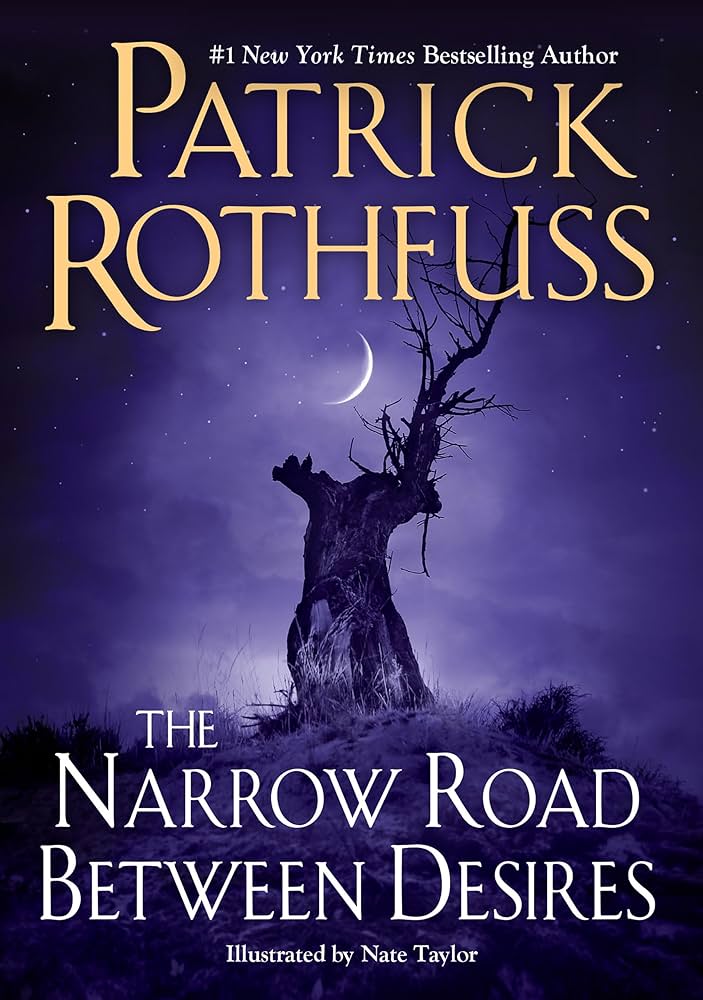
The Narrow Road Between Desires by Patrick Rothfuss
While this is not the long-anticipated doorstopper sequel to the Wise Man’s Fear, this illustrated fantasy novella is a very enjoyable read. Set all on a Midsummer’s Day, it features Bast, a fae who lives and works at Kvothe’s inn in a small village. It’s a secret that Bast is fae rather than human, and I won’t mention what type of fae. He is very handsome, and some of the villagers think he’s lazy. He provides advice and favors for the village children and tweens who visit him at the Lightning Tree…for a price. Perhaps the price is a secret, a bunch of flowers, the location of a beehive, a couple of sticky buns, or a favor. Bast can lie, but does follow some rules. Rike needs the most help; a plan to deal with his angry father. Viette wants to keep a kitten, someone wants to learn about the fae, and a boy wants revenge on a brother who stole his sweetheart. Another girl wants to avoid a well-deserved scolding. Bast also woos a pretty lady, with help from one of the kids. He is supposed to be running an errand for Kvothe, but keeps mislaying things. By turns serious and very funny, with many black and white illustrations by the talented Nate Taylor, I didn’t want this story to end. Reading this on one of the shortest days of the year, it was lovely to be immersed in a long, warm, and sunny day.
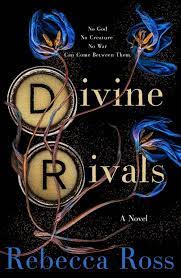
I listened to the first half of this Good Reads Choice Award teen fantasy on audio, narrated by Rebecca Norfolk and Alex Wingfield, both excellent narrators, and read the rest in print a few weeks later. This is the first book in the Letters of Enchantment duology. The second, Ruthless Vows, will be published December 26, and is likely to be just as popular.
Iris Winnow, a poor teen journalist, is vying for a columnist job along with well-educated and well-dressed Roman Kitt. Forest, Iris’s brother, has enlisted in a war between two recently awakened gods. Iris types letters to Fores on a typewriter she inherited for her grandmother, hoping her mother doesn’t find and pawn it. The typewriter turns out to be linked to another typewriter, now owned by Roman, who replies to the letters using his middle name.
After Iris suffers a loss and a setback, she signs up to be a war correspondent and takes the train to a distant town, staying along with a fellow war correspondent, with a kind boardinghouse owner. The town is on high alert for human or magical attacks. Iris hopes to find news of her brother. Iris is surprised (though not the reader) when Roman follows her, now also a war correspondent, and Iris learns of their grandmothers’ connection. At Iris’s request, Roman shares stories of the gods. Once rivals, Roman and Iris quickly fall in love. A dramatic cliffhanger ending sets up the sequel. The rivals to lovers romance is believable and the characters and dark, dangerous steampunk setting are memorable. Not a happy book, but a compelling read.
Highly Suspicious and Unfairly Cute by Talia Hibbert
Black British teens Celine and Bradley were friends until a few years ago, when Bradley, an athlete, became very popular. Bradley has obsessive compulsive disorder, but it’s not presented stereotypically and most of his friends are unaware of his issues. Celine is refreshingly weird, is usually scowling, and has a popular conspiracy themed social media site. Their mothers are best friends, and are delighted when the teens both qualify for an unusual scholarship competition, which involves hiking, orienteering, and camping. Neither Celine or Bradley is outdoorsy, though they’re both capable hikers. Speaking of the title, Celine is highly suspicious, and thinks that Bradley is unfairly cute, especially his hair. They become friends again, with plenty of funny banter leading to a sweet romance. This was an entertaining and enjoyable read from an author best known for her adult rom-coms, the Brown sisters trilogy.
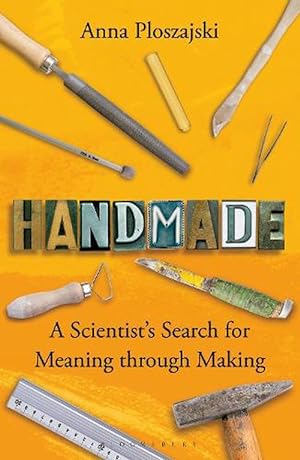
Handmade: A Scientist’s Search for Meaning through Making by Anna Ploszajski
British materials scientist Anna Ploszajski shares her explorations of making and using 10 different common materials, visiting experts around Great Britain and trying her hand at making ceramic mugs, a fireplace poker, and much more. Part exploration, part history, part science, and part memoir, sharing her own and her family’s stories, with humor and candor.
The materials covered are glass, plastic, steel, brass, clay, sugar, wool, wood, paper, and stone. Her Polish grandfather fled troubles as a toddler in Siberia and World War II in Europe, eventually opening a plastics business in England. In working with brass, Anna shares her decades long love with playing the trumpet. She has many sugary snacks and drinks during an attempt to swim the English Channel. Wooden spoons are carved, stone is worked, glass is blown, and a blanket is knitted during her travels. Tough times in grad school were eased by inexpertly throwing clay on a wheel with a fellow classmate, and now she learns to make two glazed ceramic mugs. A fireplace poker is made and later gifted. The chapter on stone reveals that she has had a fear of heights since childhood, and much of Great Britain is explored during her travels by bike, train, and a camper van named Allen.
Anna is also a stand-up comedian, talking about science, and an entertaining lecturer about various topics in science, including glassblowing. As Anna is an excellent storyteller, she really kept my interest in learning about all the different materials, and about her life as a scientist and now, maker.
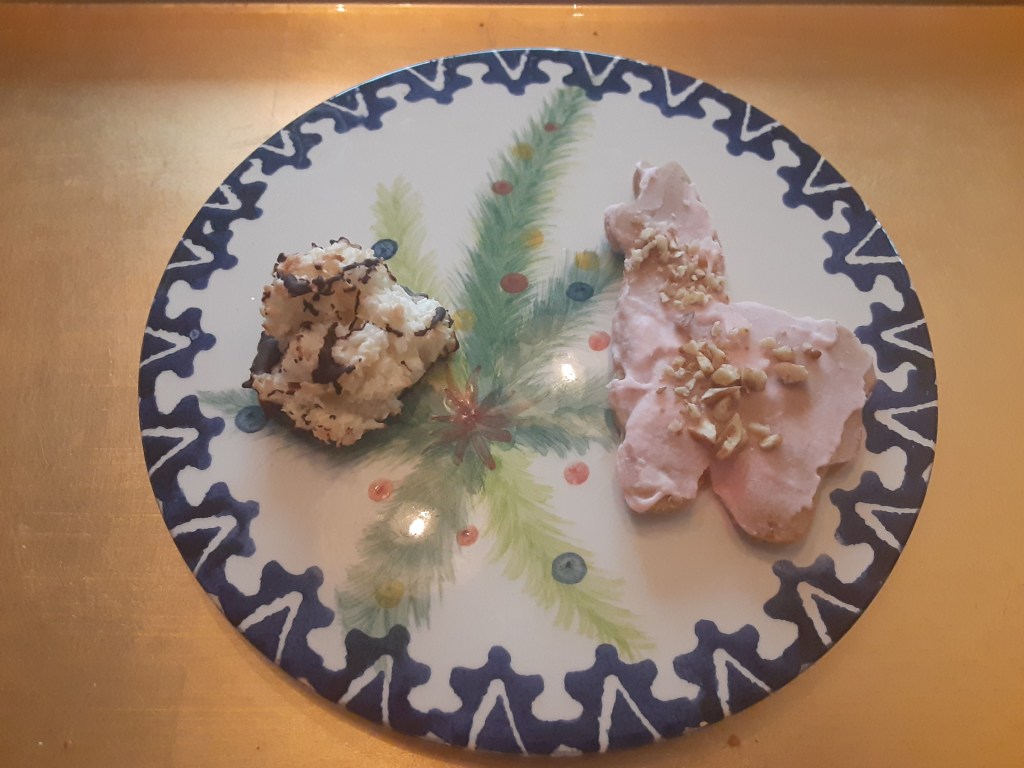
I had fun baking last week. I made the pecan sugar cookies first. I used fresh Georgia pecans from Sunnyland Farms that I lightly toasted and chopped. The cookie batter, even before it was baked, smelled like butter pecan ice cream. The dough is rolled out, then chilled before being cut out, then baked. They have a simple brown butter icing that adds to the deliciousness. I tinted the icing pink just to be festive. Chopped pecans are sprinkled on the top. A variety of cookie cutters can be used, and no decorating skills are needed. The dough can be made in advance and chilled, and the cookies freeze well. The recipe is from Sally’s Baking Recipes, here.
I also made coconut macaroons, dipped in melted chocolate and drizzled on top. These are naturally gluten free, and also freeze well. Also from Sally’s Baking Recipes, here. You can use semisweet or dark chocolate bars for the chocolate, and almonds would make a nice addition.
My next baking project is kolacky with almond and cherry fillings and Neapolitan cookies.
This is Book 22 in the wonderful science fiction series Foreigner. Foreigner is the first book, in which Bren Cameron is a linguist and diplomat, the only human on the mainland of the Atevi homeworld. This is still mostly true, with rare exceptions. Over the past four years, I’ve reread the first 20 books, and savored the two most recent titles. They have danger, diplomacy, excitement, the very intriguing Atevi, and no one of Bren’s inner circle has come to serious harm, making for thrilling reads with little anxiety. In this book, Bren has been traveling with powerful, elderly Ilisidi by train, and they are headed for trouble on the south coast. And Ilisidi’s age may finally have caught up with her, making for some very anxious moments for Bren. A rest at Bren’s coastal estate, Najida, is much anticipated. But they aren’t traveling alone on the train, and it remains to be seen how far Bren can trust Lord Machigi or the proposed new Lord Nomari. Then Banichi and Jago, his security guards and very close companions are headed into danger. A very young ally sends help, via a single engine plane. While trains are common, and the world has buses, trucks, and even a space shuttle, planes are an uncommon and slightly risky mode of travel. Of course, Bren is soon aloft, and in some peril himself. This is an exciting novel, skillfully plotted, with characters that continue to develop, as they have throughout the series. More, please!
An extra-special Magical Cats cozy mystery. Minnesota librarian Kathleen is looking forward to traveling with Marcus, a local detective, to Boston for Christmas with her family. There’s a problem with their scheduled flight, but taking the train may be a good option, and all will be well.
Before that, Marcus and amateur sleuth Kathleen investigate a very cold case when Kathleen finds a body that may be connected to a young woman who disappeared decades ago. Is there any family to contact, or friends who would remember what happened? Cats Owen and Hercules do their feline best to assist; neighboring dog Fifi finally makes friends with the cats and tries to help Kathleen.
In between sleuthing, there is cocoa and Christmas cookies to enjoy, tai chi classes, recipes to sample, and an art studio to repair after a pipe froze, along with other small town Minnesota winter pleasures, including table hockey.
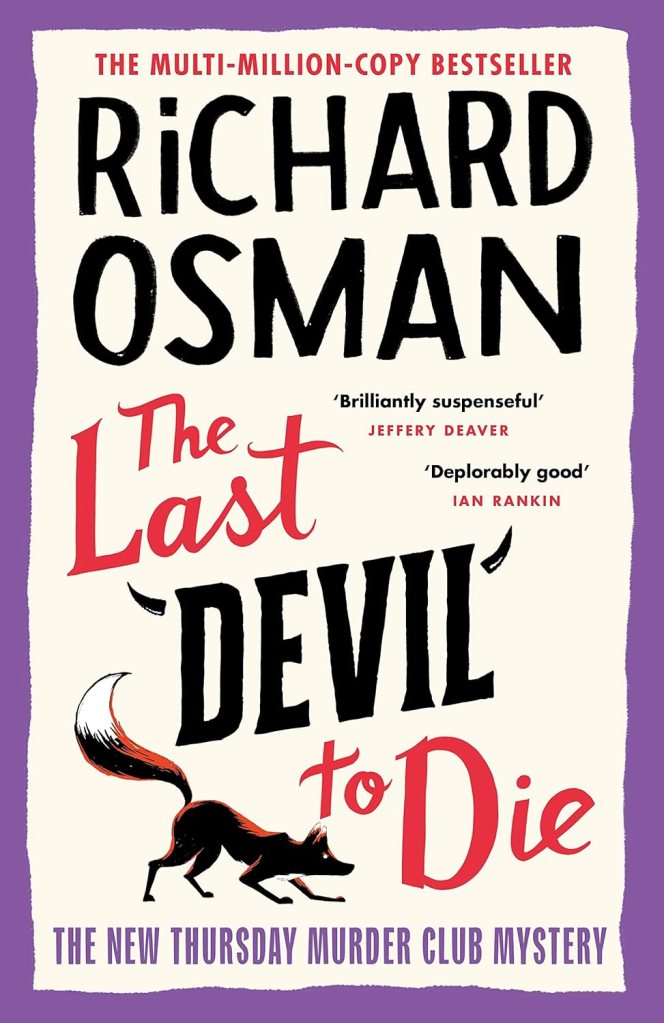
The Last Devil to Die by Richard Osman
While definitely not a cozy, this British mystery, fourth in the Thursday Murder Club series, may appeal to a broad range of mystery and thriller readers. Three amateur senior sleuths in a luxury retirement village, along with a retired spy, meet weekly to discuss cold cases, but often find modern mysteries to solve. Elizabeth’s husband Stephen, who has dementia, was friends with the owner of antique shop. The shop owner’s sudden death appears to be connected to a missing box full of heroin. The Thursday Murder Club investigates, aided by police officers Chris and Donna, Donna’s mother Patrice and jack-of-all-trades Bogdan, looking at a couple of wealthy heroin dealers, other antique dealers and art forgers, professors, and an imprisoned cocaine dealer.
A subplot of romance fraud introduces new Fairhaven residents Mervyn and techie Bob. Joyce bakes and asks questions; Ron drives and plays whatever part is needed. Ibrahim is a brilliant, mostly retired psychiatrist, while Elizabeth brings a gun and is usually their leader. Colorful and fast-paced, with a bit of violence yet poignant at times, this is an excellent entry in the series, which begins with The Thursday Murder Club.



 Book Girl & Little Bear