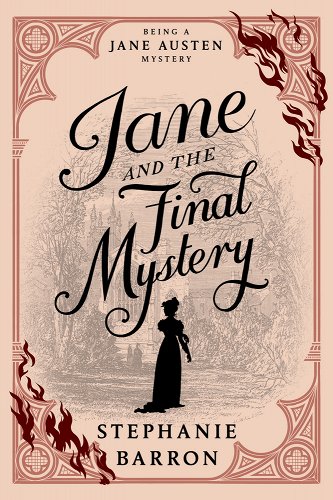
I have enjoyed this long series of British historical mysteries featuring author Jane Austen as an amateur sleuth, beginning with Jane and the Unpleasantness at Scargrave Manor. Jane and her sister Cassandra exchanged many, many letters over the years and the outlines of Jane’s life and writings are known, giving author Stephanie Barron many real-life settings for her mysteries.
Jane fans know that the author died fairly young, and she is in decline during this mystery, but I still found it a clever, enjoyable read. Visiting her friend Elizabeth Heathcote at Winchester, Jane’s support is needed when Elizabeth’s stammering son, William, becomes a suspect in a crime at his all-male boarding school, Winchester College. Jane’s nephew, Edward, recently graduated from Winchester College and is a great help in her quest to clear William’s name. William won’t give an alibi for the time of the crime, but wasn’t at the school. Jane, naturally, finds out what happened, and especially why.
Despite having discomfort and needing to rest more, Jane’s brain and her pen are as active as ever. There is also definite hope for some new treatments. This is indeed the final mystery in the Jane Austen series, but new readers have many to enjoy, including a holiday title: Jane and the Twelve Days of Christmas.
Future blog posts will include a couple of holiday reads, a teen fantasy novel, a new mystery by Richard Osman, and two books by engineer/historian Henry Petroski, best known for his microhistory of the pencil. More nature and baking photos are also expected, plus another appearance from Little Bear.
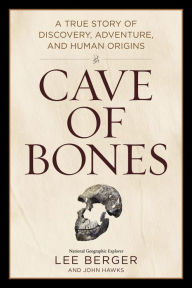
Real life adventure and popular science combine in this thrilling, controversial book. First, in 2008, paleoanthropologist Lee Berger was out hiking with his dog and his son Matthew, 9. He was looking for potential sites to excavate, when Matthew found a fossil, which turned out to be a new species of hominin, Australopithecus Sediba, dated to about 1.9 million years old.
Then, in 2013, three cavers exploring for Lee Berger found a very deep and all but inaccessible cave, later called the Dinaledi Chamber, where they took photos of what appeared to be hominin bones. Berger quickly organized a three-week excavation, advertising for slender paleoanthropologists who weren’t claustrophobic. I have been on guided walks in several caves, but I’ve never gone spelunking or caving, where you need a headlamp and the ability to crawl, climb and rappel through very tight passages. The Dinaledi Chamber was extremely hard to access, with a tight squeeze through one tunnel, a climb into another, and finally a twelve-meter chute to climb down, through which most climbers would get stuck. Then they went through another chamber and finally into the magnificent Dinaledi Chamber, with beautiful flowstone above, and fossils almost everywhere below. The fossilized bones of at least 15 individuals were found, and over 1000 bones.
As the fossilized bones were revealed, carried out to the surface and analyzed, they found they had discovered a new species, named Homo Naledi, later estimated to be 250,000 to 350,000 years old. The brain was very small, and the shoulders and upper arms were like a climber, but the wrists, fingertips, and feet were much less primitive, not unlike our own. Also, their teeth and the hardened calculus around them indicate that they ate some plants. They were probably about 5 feet tall, with long arms, and walked upright. The exciting part is that Berger and his team, including co-author John Hawks, found some evidence of fire, graves, art and possibly tools.
I watched a Nova documentary from 2015, Dawn of Humanity, about the work done up to that time, and read a couple of recent articles about their findings. While National Geographic is firmly backing Berger and his team’s work, other scientists don’t agree with all these findings, particularly that of fire, art, and tool use. It will be interesting to see what else is found in the Rising Star Cave system. One very exciting section details Berger’s quest to enter the cave himself. In his late fifties, he is tall and not slender, but loses about 50 pounds to make the attempt, during which he spots some markings outside the chamber. Does he get down the chute? I’m not saying, but on his way back out of the cave system, he almost gets stuck and was reportedly injured. Also, he deliberately didn’t tell his family about his attempt to enter the Dinaledi Cavern ahead of time. As teens, Matthew Berger and his sister Megan both successfully made the journey.
The finds in the Dinaledi Cavern, however controversial, are remarkable and make for a compelling and fascinating read. For those with Netflix, there’s a new documentary, Unknown: Cave of Bones. For more about paleoanthropology, I enjoyed First Steps: How Upright Walking Made Us Human by Jeremy DeSilva. For real life adventure and caving, there’s Into the Planet: My Life as a Cave Diver by Jill Heinerth.
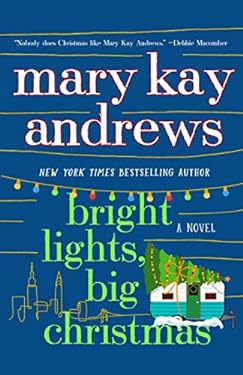
Kerry, a freelance graphic artist, very reluctantly agrees to spend a month with her brother Murphy in New York City to sell the Christmas trees Murphy and their father Jock grow in the mountains of North Carolina. Jock is recovering from a heart attack, and her mother Birdie, thinks she needs to get out more since her job was eliminated in a corporate merger. A change of scene does sound good, and Kerry has fond memories of past Decembers in New York. But driving her dad’s old Ford truck to New York City while towing a vintage camper has her uneasy, and the camper’s plumbing doesn’t even work.
The Tollivers have been selling Frasier fir trees in Greenwich Village for over 35 years, and local business owners and residents help with setup, electricity, hot coffee, and bathroom breaks. And Murphy’s dog Queenie is a sweetie, though it turns out that Murphy snores, loudly. After the opposite of a meet-cute, Kerry is charmed by local Patrick and his young son Austin. Also welcoming are a mom of toddler twins, a restaurant hostess who gets Murphy to smile, and an older man who brings Queenie treats and gives Kerry advice on improving her sketches for an illustrated winter story she’s making with young Austin.
The hours are long, the weather gets colder, Kerry’s decorated wreaths keep her very busy, and showers and meals are as regular as she’d like. But the hospitality of the neighborhood is awesome, apart from rival Christmas tree sellers. Charming, funny, and heartwarming; a delightful holiday read even on a beautiful fall day.
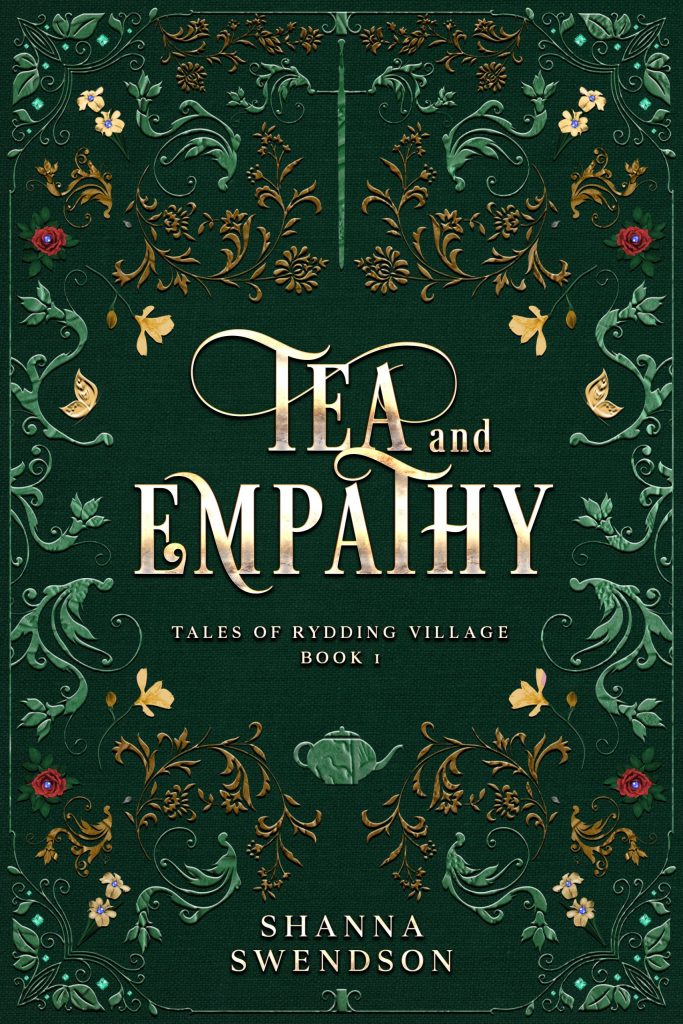
Tea and Empathy: Tales of Rydding Village, Book 1 by Shanna Swendson
Author Shanna Swendson set out to right a cozy fantasy in a traditional setting, a welcome recent trend. She is best known for her contemporary fantasy series, Enchanted, Inc., mostly set in New York City.
While the story starts with Elwyn at a very low point, wondering if she’ll survive, it ends with her and the village of Rydding starting to thrive. Elwyn is on the run, hungry and weak. She leaves the main road for a lane leading into a forest, where she immediately feels safer, then crosses a stone bridge over a bridge to find a quiet village in the valley. Elwyn finds refuge in a vacant stone cottage with a large overgrown cottage, reminding her of a cottage she once lived in. This cottage turns out to be something magical. Elwyn, who now calls herself Wyn, meets Mair, who trades her goat milk and cheese. Soon Wyn opens a tea chop in the front room of the cottage, and later, reluctantly, does a little healing. A wounded and unconscious man appears in the village, who remembers nothing of his past when he wakes up, but is happy to help Wyn with blending herbs and tea.
Will Wyn be able to stay in the village, or will serious troubles from her recent past find her if she stays in Rydding? A very pleasant read, and I look forward to more cozy fantasy novels in this series.
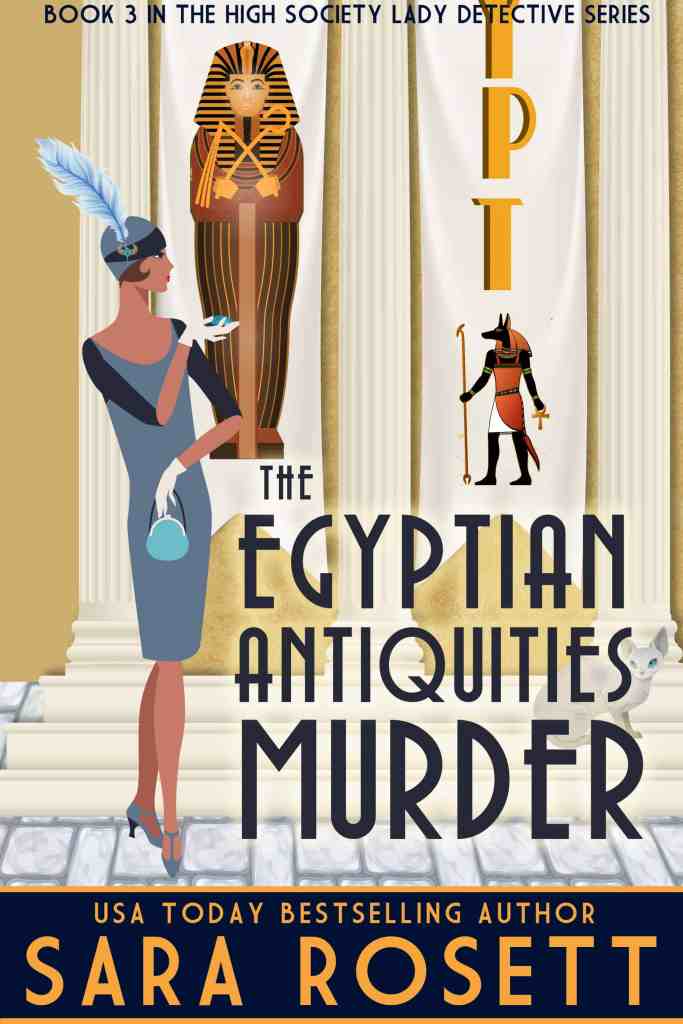
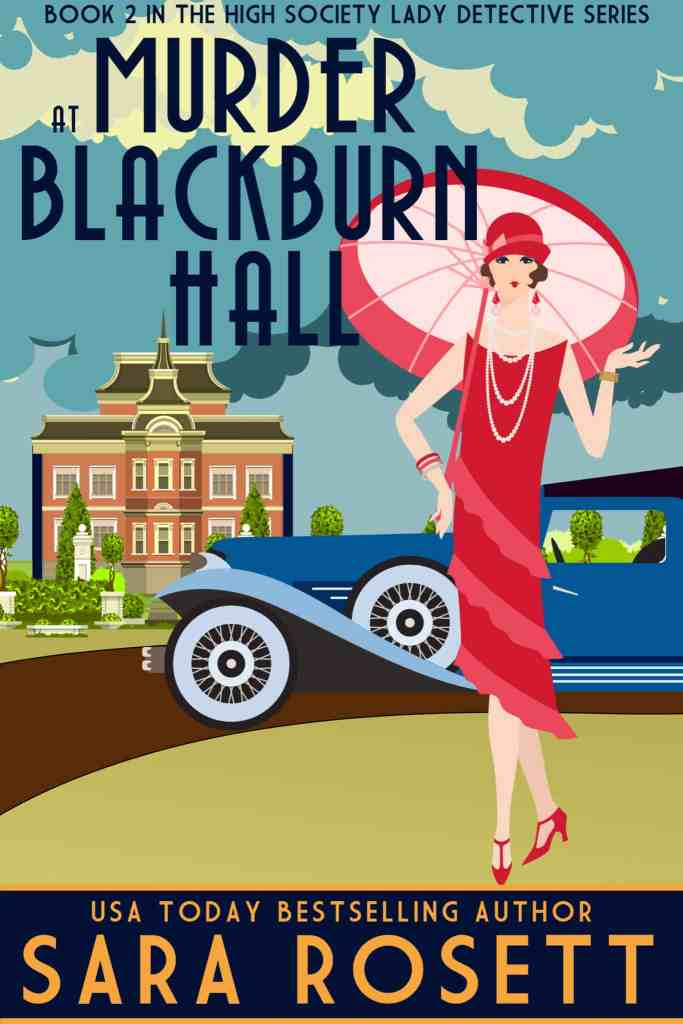
Murder at Archly Manor, Murder at Blackburn Hall, and The Egyptian Antiquities Murder by Sara Rosett
I’m always looking for new mystery series to read. I enjoy cozy and historical mysteries, and some British police procedurals but have started reading quite a few mystery books that are either too light and fluffy to keep my interest or written to a formula and not distinctive enough to be memorable. Other mysteries are darker than I’m in the mood to read. So, I’m happy to discover the High Society Lady Detective Mysteries by Sara Rosett. I’ve enjoyed her contemporary series featuring Ellie Avery, a military spouse and mother who has become an expert at organizing and moving, and talented at solving mysteries as well. There are already seven titles in this historical series featuring Olive Belgrave, and I was impressed by the first three titles. They are set in London in 1923, and in houses in the English countryside.
Olive is living in a boarding house in London, looking for steady work, when her aunt asks her to investigate the background of her daughter Violet’s fiancé Alfred Eton. With the help of her cousin Gwen (and Gwen’s hand-me-down gowns) and her friend Jasper Rimington, Olive sets out to uncover the mysterious Alfred’s past. An unfortunate accident during a fireworks show has Olive searching for a possible murderer.
The second book, Murder at Blackburn Hall, finds Olive back in London, with most of her sleuthing involving locating missing pets. Then a publisher contacts her to locate a missing mystery author, whose latest manuscript is overdue. The challenge is that no one knows what the author looks like. A body is found on the riverbank near Blackburn Hall, possibly an accidental death. There are a couple of big secrets for Olive, and occasionally Jasper to uncover, when not playing golf or attending formal dinners at the Hall. The setting is described in just enough detail, and I liked that Olive is smart, not unnecessarily putting herself in danger. The Egyptian Antiquities Murder, set at a large town house in London owned by an amateur archaeologist, is atmospheric without being spooky, and the mystery is quite clever. I actually listened to the audiobook of Blackburn Hall, with a very good narration by Elizabeth Klett, before I read the other two books, I look forward to reading the other books in the future.
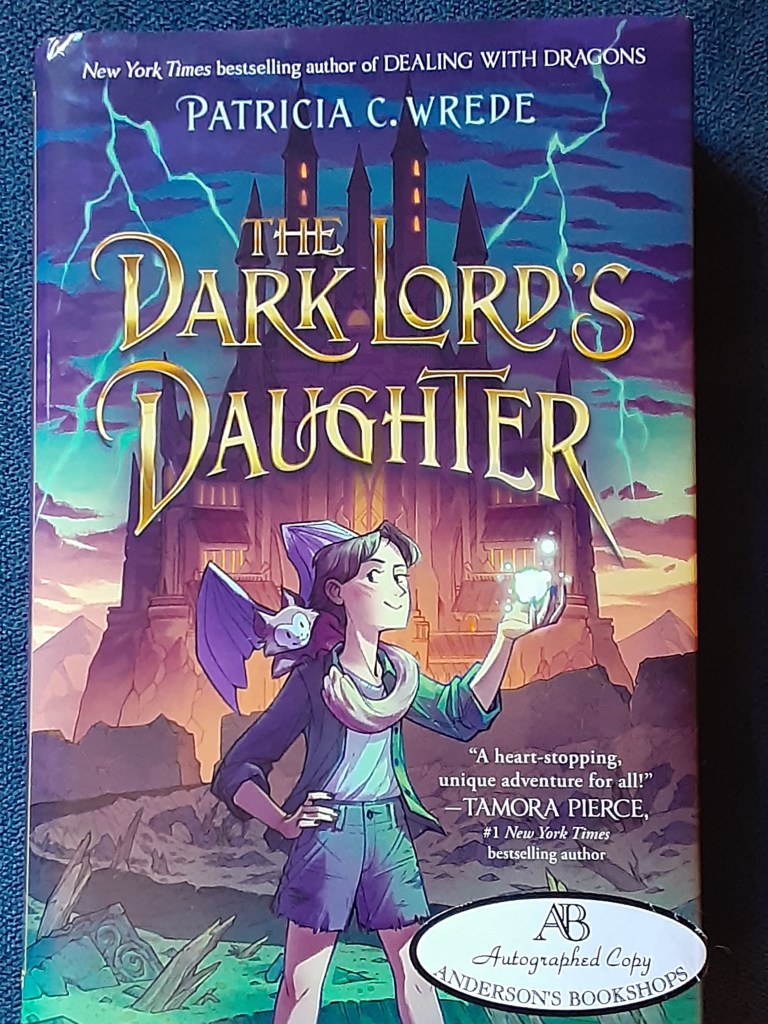
This book is perfect for readers who enjoy cozy or lighthearted fantasy. Marketed for middle school readers, yet appealing for all ages. Kayla Jones, 14, visits the Minnesota State Fair, an annual tradition, with her adoptive mom Riki and her younger brother, Del. Suddenly they are transported to a stone circle in Zaradwin, where Kayla is called Xavrielina, the new Dark Lady.
Kayla’s tablet computer becomes her talking familiar, the castle has dragon skulls that speak, and Kayla’s aunts may not have her best interests at heart. On the positive side, her cousin and potential rival wants to be a musician while another relative loves to cook.
Kayla, aided by her familiar, her practical and protective mother, her lively younger brother, and the castle librarian, learns what her options are as a Provisional Dark Lady. Exploring the castle, learning a little magic, trying to get back home to Minnesota, and discovering if a Dark Lady really must curse or exile her rivals make for very enjoyable reading. Patricia Wrede co-authored Sorcery & Cecelia: Or The Enchanted Chocolate Pot and other teen fantasy novels as well as the very popular Dealing with Dragons and other Enchanted Forest books. I’m happy to hear that a sequel to The Dark Lord’s Daughter is planned.
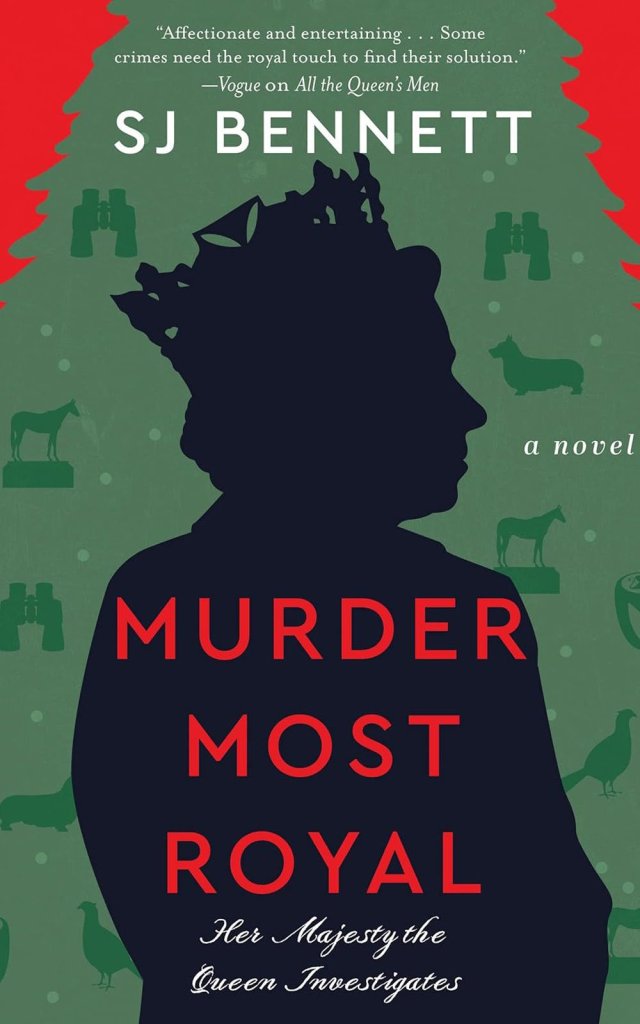
Murder Most Royal: Her Majesty the Queen Investigates by SJ Bennett
This is the third mystery by Bennett featuring Queen Elizabeth II, age 90, and her assistant private secretary, Rozie Oshodie. The Queen has solved quite a few mysteries over the years with the assistance of her assistant private secretaries, and has managed to keep her detecting a royal secret. Not even the Queen’s private secretary, Sir Simon, has a clue. Quite a fun premise for a series; I enjoyed The Windsor Knot, set at Windsor Castle and All the Queen’s Men set at Buckingham Palace. In this book, the Queen and her husband Prince Phillip are headed to Norfolk for the winter holidays in 2016, for several weeks at Sandringham House. Both the Queen and her husband are dealing with flu or colds at the beginning of her visit, leaving her more time to sit and think when a hand is found on a nearby beach. Rozie shows the Queen a photo, and she identifies the ring as belonging to the St. Cyr family.
Life at Sandringham House is described with just the right amount of detail, and the Queen and Rozie both narrate chapters. Rozie meets her immediate predecessor, and is introduced, reluctantly, to wild swimming. Some of the St. Cyr family are interested in wilding, returning their estate to a more natural state, but there have been problems with wild boars and beavers. Rozie and the Queen uncover several secrets about the St. Cyr family, both recent and decades old. As the Queen would like, there are lots of dogs and horses in this mystery, even providing a clue or two. A rather twisty plot has all the loose ends solved in the end. Book Four, A Death in Diamonds, will be a prequel set in 1957, much of it on the royal yacht Britannia. Another book set at Balmoral Castle in 2017 is planned. The Queen and Rozie are likeable characters in these mysteries, and the dialogue is nicely written, making for engaging reads. Enjoy!
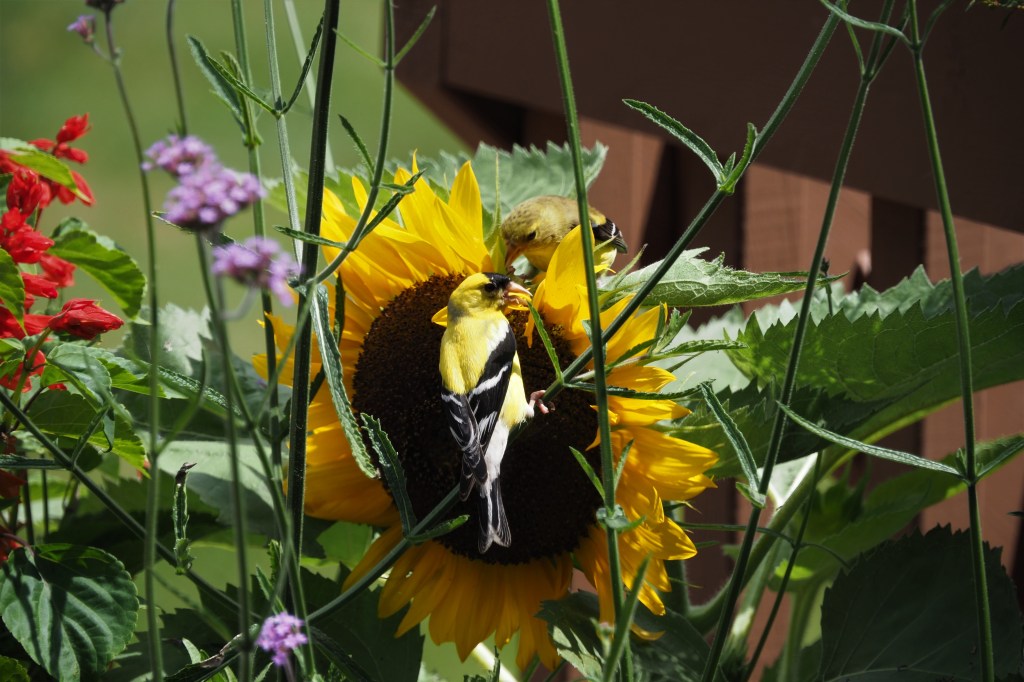
This past winter I started quite a few plants from seed, turning part of my laundry room into a mini greenhouse. Not everything sprouted, and many seedlings never flourished. These are some of my favorites from this summer and fall. The Verbena grew many tall, thin flower stalks, and the Monarda had up to four tiered flowers on each stem.
Verbena Bonariensis with Ruby Throated HummingbirdFeathertop Ornamental GrassLemon Mint MonardaBig Smile Dwarf Sunflower with Goldfinches and Summer Jewel Red Salvia
The Underworld: Journeys to the Depths of the Ocean by Susan Casey
Journalist Susan Casey has long been fascinated by the ocean. She’s written books on sharks, rogue waves, and dolphins. Here she shares the joy and wonder she experiences while learning about and visiting the ocean depths. She travels around the globe interviewing scientists and explorers, including Don Walsh and Victor Vescovo. The book is full of photos of the weird, wonderful, and numerous creatures of the deep ocean.
It’s fun to read about her experiences at sea. Her first chance to dive in a submersible to the deep ocean comes in the Bahamas, where the 3-person Neptune goes to the bottom of the twilight zone, 1000 meters deep.
Another intriguing chapter involves the search for a Spanish galleon off the coast of Columbia, that was sunk in 1708, with a cargo full of treasure. The challenges of locating the ship, keeping that location secret, and obtaining funding and permission to raise the ship are detailed.
More sobering sections discuss the risks of plastic debris on the ocean floor and recent proposals for deep sea mining.
The most exciting chapters describe Case’s final chance to dive to the abyssal zone, over 5000 meters below the surface in a 2-person submersible, to the base of one of Hawaii’s underground volcanoes.
Armchair travel, popular science and real-life adventure combine in a compelling and informative read.
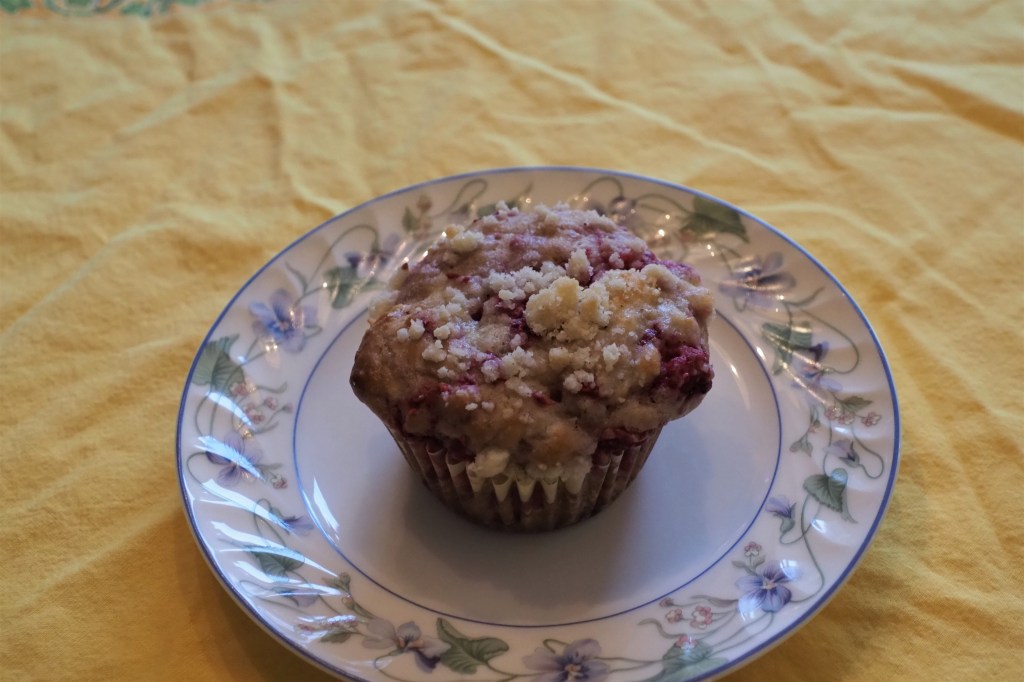
Muffins are one the easiest and most delicious things I like to bake. You can make mini muffins for a large group, or regular size muffins to enjoy at home, and they freeze well. Blueberry muffins are a classic, and I have several different recipes I’ve tried, having been baking them since I was a teenager. A couple of months ago Deb Perelman of the very popular Smitten Kitchen blog and author of three cookbooks, posted the recipe for Raspberry Streusel Muffins. Deb is known for her very funny descriptions of her recipes, or headnotes. She states that these might be the best muffins she’s ever made, so I had to make them. They are made with frozen raspberries. Like many bakers who’ve tried this recipe, I made 9 muffins, not 6. The cooled muffins stuck to the cupcake liner. They are tangy and have a good texture if you like raspberries. I added ¼ teaspoon of nutmeg to the streusel and added the zest of half a lemon to the batter. If I make them again, I would brush melted butter in the muffin tins and skip the cupcake liners. These are fine, but not the best muffins I’ve ever baked. If you make them, follow the directions carefully.
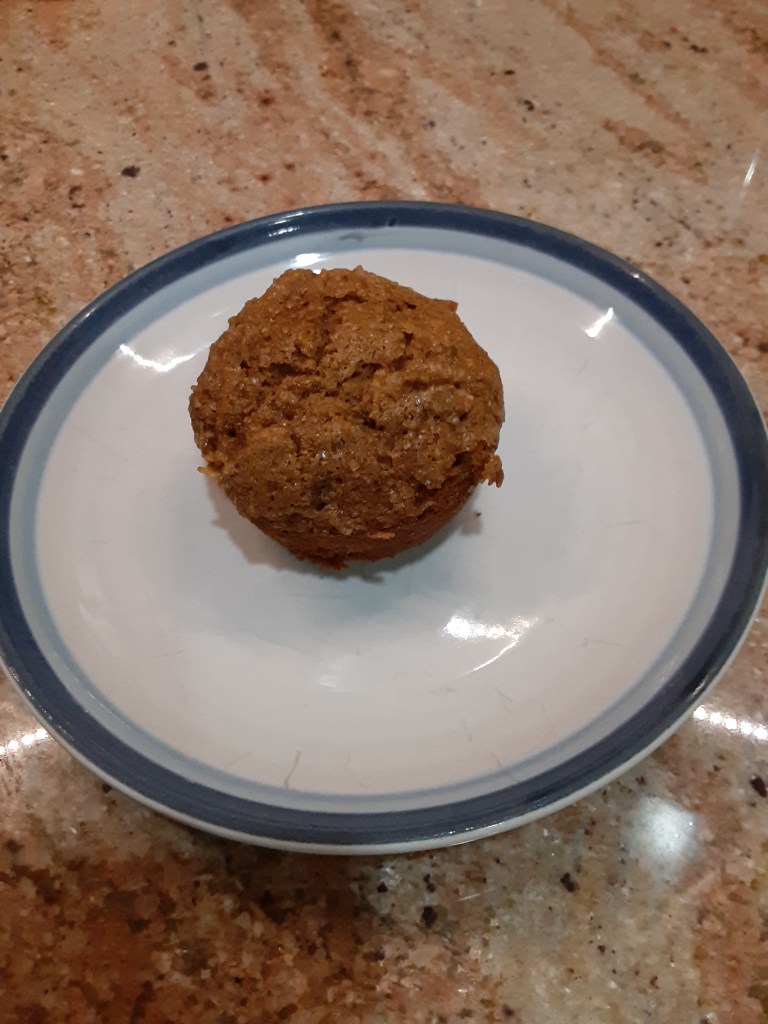
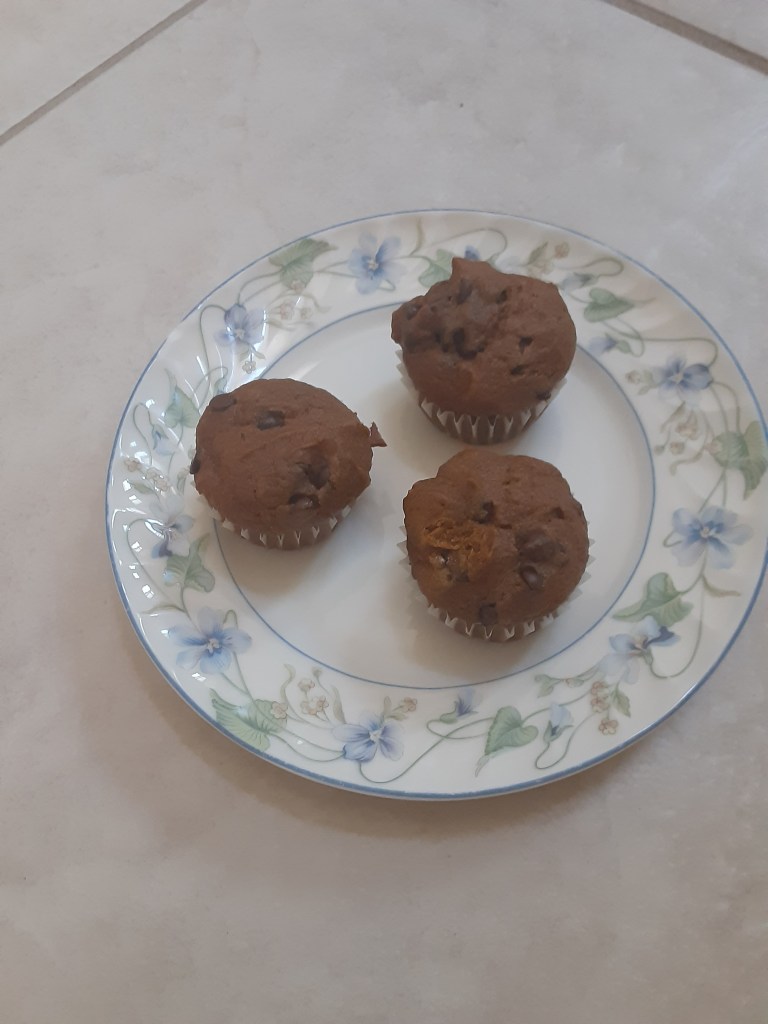
For easy and very reliable muffins recipes, I rely on Sally’s Baking Recipes. Sally McKenney also has a popular blog and is the author of three cookbooks, but isn’t quite as well-known as Deb of Smitten Kitchen. The Apple and Pumpkin Chocolate Chip Muffins recipes are on her blog. If you’re looking for a very healthy muffins recipes, look no further. For seasonal baking, I really like the Pumpkin Chocolate Chip Muffins. Mini chocolate chips are used, and that makes it easy to bake mini muffins, or regular size. Even Sally’s bran muffin recipe is delicious. Even though these are easier to make and healthier, I like both of these recipes better.





 Book Girl & Little Bear