Gemini

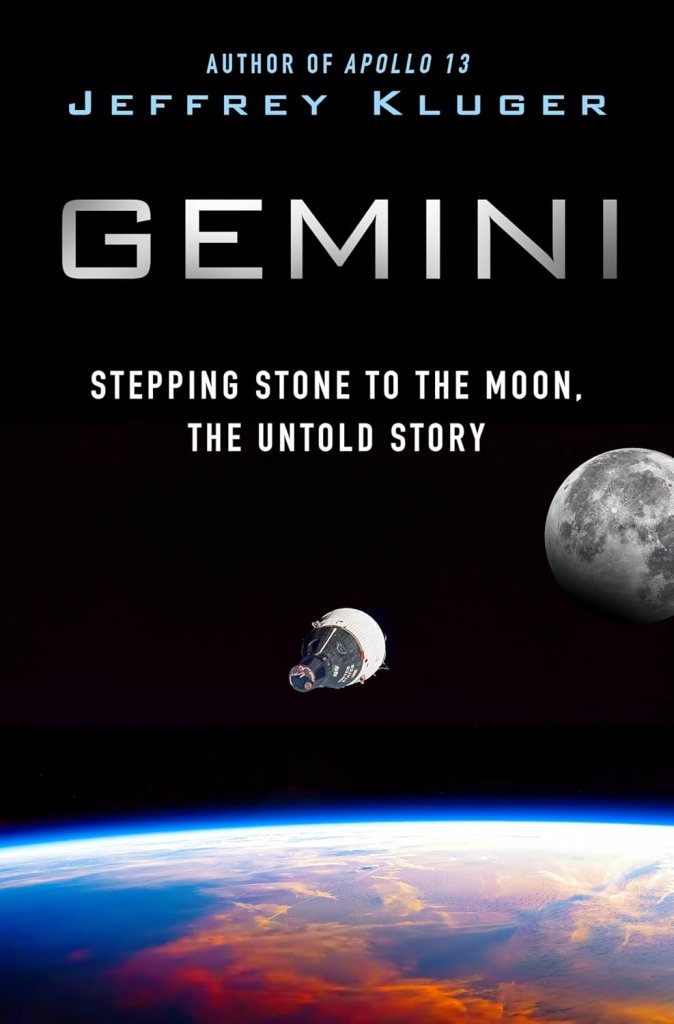
Gemini: Stepping Stone to the Moon, The Untold Story by Jeffrey Kluger

Mercury astronauts were first in space while Apollo astronauts went to the moon. Gemini, the NASA program in between, sometimes gets overlooked. Kluger, the author of Apollo 8 and Lost Moon: The Perilous Voyage of Apollo 13, tells the story of Gemini very well. The Gemini Project began in 1961 and was always meant to set the stage for the Apollo missions. The new spacecraft held two men (no mention here of the Mercury 13 women who hoped to be astronauts), used a larger rocket to launch, and included the first spacewalks and attempts to rendezvous with another spacecraft. Ten manned missions were launched in 1965 and 1966, which was truly unprecedented.

The names of many of the astronauts who flew the Gemini missions will be familiar to space buffs, including John Glenn, Neil Armstrong, Jim Lovell, and Gus Grissom, as well as flight directors Chris Craft and Gene Kranz. The quest to build the spacecraft did not go smoothly, and there was always the pressure of not enough time, trying to catch up and pull ahead in the space race with the Soviet Union. The flights themselves make for compelling reading, and the personalities of the astronauts and NASA engineers are memorably sketched. Very interesting and informative reading. Here’s one fun fact: NASA pronounces Gemini as “Geminee”.

Brenda
The Martian Contingency

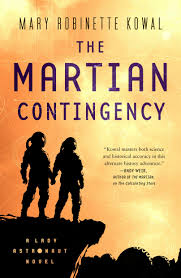
The Martian Contingency: A Lady Astronaut Novel by Mary Robinette Kowal

Elma York, 48, is the deputy administrator on Bradbury Base on Mars. The year is 1970, but this is an alternate timeline. In Kowal’s award-winning Lady Astronaut series, the race to space was accelerated after a meteor strike in 1952 triggered global warming as well as causing many, many deaths. Technology developed for space is also helping conditions on Earth. Racism and discrimination against women are evident here, but they are being dealt with much sooner than on our version of Earth. Elma and her husband Nathaniel, an engineer, are part of the 2nd expedition to Mars, and they will not be returning to Earth. Elma really enjoys math, piloting, and baking, especially when she’s anxious. Nathaniel is a workaholic and they are both Jewish. On the base the habitat observes Jewish, Islamic, Chinese, Hindu, and Christian holidays. The calendar is a focus here as days on Mars are 39 minutes longer and the year is twice as long as on Earth, and there is a time lag for communications. While technology is more advanced than our Earth was in 1970 (or in 2025), in others not so much, such as for healthcare. Secrets from the first expedition are gradually uncovered, and there are complications in preparing for the next expedition, which will include teens as well as adults. This is the fourth book, after The Relentless Moon. Calculating Stars is the first book, and they are all excellent, compelling reads. I am enjoying the combination of science fiction and alternate history, as well as the memorable characters. I read a digital review copy; the novel will be published March 18.

Brenda

Astronauts in Orbit: Two Books

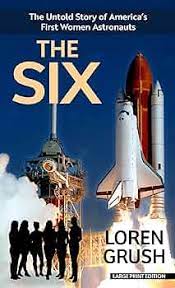
The Six: The Untold Story of America’s First Women Astronauts by Loren Grush

The NASA astronaut candidates of 1978 included six women who would all fly in near-earth orbit on the four space shuttles, before the construction of the International Space Station. The lengthy application and testing process is described in detail, along with the long wait to be selected for a space shuttle crew. Sally Ride became famous as the first American woman to orbit the earth, while Judith Resnick was better known for her second, ill-fated flight, on board Challenger in January, 1986. Sally was named to the the committee which investigated the Challenger disaster. Some information about the six was new to me, especially the stories of two women physicians, Anna Fisher and Rhea Seddon, who became pregnant and gave birth while waiting their turn to fly in space, and worked very close to their due dates and returned to work soon after. The six women, faced extra challenges due to their gender in a very male-dominated field, and added pressure from the media. This was great to read alternately with Orbital. Readalikes include The Mercury Thirteen by Martha Ackmann, Handprints on Hubble by Kathy Sullivan, and the novel The Calculating Stars by Mary Robinette Kowal.

Orbital by Samantha Harvey

This beautiful, lyrical novel set a few years from now is a very memorable read, and will likely be nominated for multiple awards. It’s also short, and covers a single twenty-four hour day on the International Space Station. Four astronauts and two cosmonauts, from five countries, are several months into their overlapping nine-month stays on the station. The sixteen daily orbits around the planet reveal the beauty of the planet, the skies, and one massive typhoon heading for the Philippines, where Pietro and his wife met a fisherman and his family on their honeymoon. Chie learns that her mother has died in Japan. Their tedious daily exercise and tightly scripted work days contrast with the absolutely amazing sights including multiple sunrises, shared dreams, and relationships among the crew, their found family. The day described is also notable for another launch into space. Good Morning, Midnight by Lily Brooks-Dalton is a readalike for this excellent novel.

Brenda