Six Weeks by the Sea

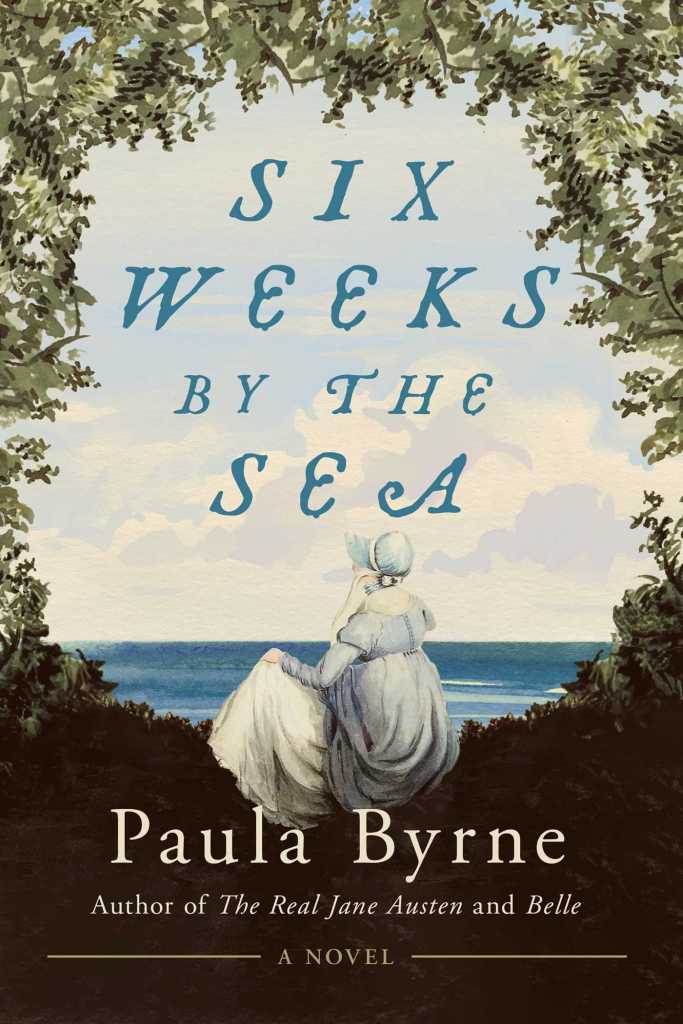
Six Weeks by the Sea by Paula Byrne

In 1801, Jane Austen, her parents, and sister Cassandra moved from the vicarage at Steventon to the city of Bath. Jane was upset at the news, and later at the loss of her piano. At 25, Jane is not yet a published author. She agrees to the move only after her parents promise a seaside holiday every summer.

This novel tells the story of that first summer by the sea, at Sidmouth. Author Paula Byrne, a biographer, wondered if Jane had ever been in love, as she wrote of it so wittily. In Sidmouth, Byrne introduces two suitors and a young biracial girl to the Austen family. Jane uses her connections to help find a foster home for the little girl, and has hopes of a possible romance between her favorite brother, Captain Frank Austen, and Martha Lloyd, the best friend of Jane and sister Cassie.

The holiday is full of seaside walks, dips in the sea, assemblies, a play, and plenty of tea and cocoa. Jane writes whenever she has time, but doesn’t share her work with anyone outside the family except Martha. The reader knows that Jane Austen never marries, so will not expect a traditional happy ever after. Jane Austen is also featured in a mystery series by Stephanie Barron, is which Jane is an amateur sleuth, and has another potential suitor, but it’s set a few years after this novel. The first book in that series is Jane and the Unpleasantness at Scargrave Manor. This was quite an enjoyable read, and is suggested for Anglophiles as well as Janeites.

Brenda

Eleanor and the Cold War

Eleanor and the Cold War by Ellen Yardley

Read this mystery to view Washington, D.C. and New York in 1951 through the eyes of Kay Thompson, temporary secretary to Eleanor Roosevelt. Kay is 25 and very pretty, and expects to find an attractive, well-off man to marry rather than have a career. Working for Mrs. Roosevelt is quite the eye-opening experience. While many historical characters are featured, Kay is fictional, as is the mystery, the first in a planned series featuring Eleanor Roosevelt.

Eleanor is 66, and working with the United Nations. Kay is filling in as secretary for her aunt. Atomic scientist Elsa Meyer contacts Eleanor from Sweden, looking for her daughter Susan. Eleanor makes contact and arranges to meet her at Union Station in Washington. Kay and Eleanor instead find her body on the train. Detectives Barlow and O’Malley investigate, but Barlow assumes a Soviet communist is to blame, and doesn’t look further. Kay has reason to think the Russian is innocent, as is the train porter, and helps Eleanor investigate. Young politicians, another scientist, a man investigating Communists, and even young Jacqueline Bouvier, a newspaper photographer, are all involved. New York City, Washington, and Long Island are clearly described, with the historical figures, clothing, meals, drinks, department stores and women’s roles setting the story firmly in the early 1950s.

I look forward to another book in the series, and enjoyed reading about Kay and Eleanor. The author studied Eleanor’s autobiography and her many My Day newspaper columns to bring her character to life. A clever mystery that is perhaps deliberately tricky to figure out, but the characters and immersive setting make for an excellent read.

Brenda

A Death in Diamonds

A Death in Diamonds by S. J. Bennett

This is the fourth Her Majesty The Queen Investigates mystery, but is set much earlier than the others, in 1957. The premise of this delightful British mystery series is that Queen Elizabeth II, with the assistance of her assistant private secretary, solves mysteries. She never takes any credit for her detective work, and doesn’t even share her secret with Prince Philip.

Joan McGraw is a typist at Buckingham Palace and is thrilled to fill in for the Queen’s assistant private secretary Fiona, who is out on sick leave. Joan had worked at Bletchley Park during the war, and speaks French and German. While the mystery she helps the Queen solve is completely fictional, the official events, travel, and gowns are based on fact, including an unexpected encounter with Da Vinci’s Mona Lisa. The Queen’s friendship with a famous author is also real. A sabotage plot is, however, made up.

The Queen has noticed several minor problems connected with her official travel, including a speech that goes missing. Is one of her staff making mistakes, perhaps deliberately? How will this affect her upcoming visit with Prince Philip to Canada and the United States? There will be televised speeches, including one in French and English, a first for the Queen. Her children Charles and Anne are still quite young, though Charles is soon to enroll at a boarding school.

While I enjoyed the palace scenes and the travels, this wasn’t my favorite of the four mysteries in the series. 1957 wasn’t a terribly happy year in Great Britain, and the crime, which involved a secret room, a stolen tiara, and a man of uncertain nationality, takes a long time to solve and casts suspicion on quite a few people. Joan is very clever, enjoys her time with the Queen, and figures out which member of the staff is betraying the Queen’s trust. I look forward to Queen Elizabeth’s next case.

Brenda

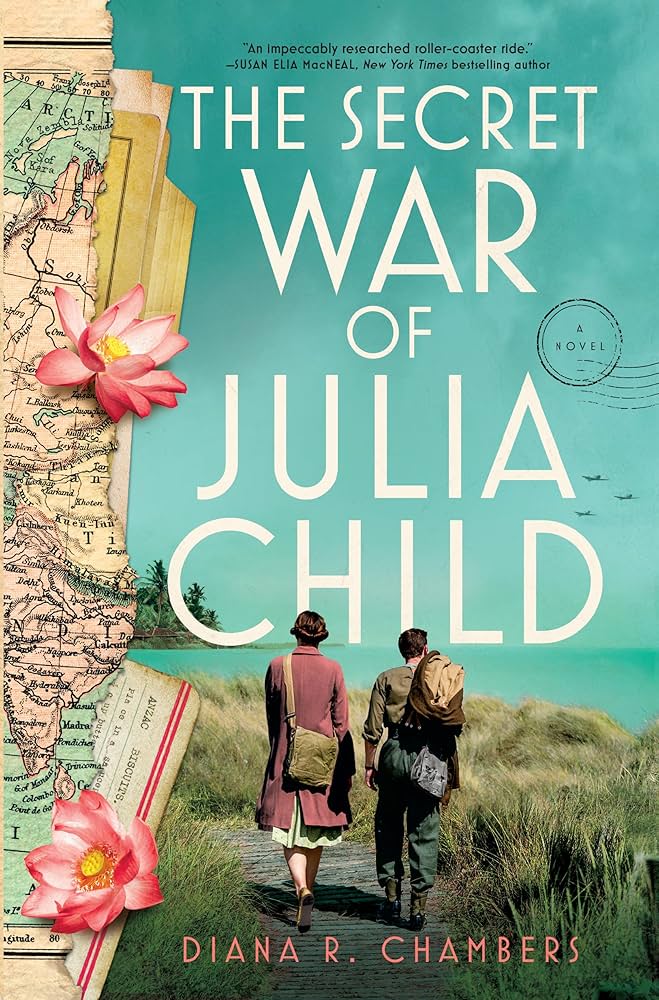
The Secret War of Julia Child

The Secret War of Julia Child by Diana Chambers

Diana Chambers takes the known facts of the life and work of Julia McWilliams (later Julia Child) from 1943 to 1945 and adds plenty of adventure, undercover work, and near-death experiences to create an exciting World War II novel set in Asia. Julia did work for the OSS, Office of Strategic Services, during the war in Ceylon (now Sri Lanka) and China, but didn’t talk much about her work. She certainly handled highly classified documents. Julia did meet and fall in love with mapmaker Paul Child, and they both enjoyed their introduction to Chinese food. The author traveled Julia’s route from India to Sri Lanka, then over the Himalayans to Kunming in western China, and her research brings the settings to life, along with the other historical characters. Readalikes include My Life in France by Julia Child with Alex Prud’homme and A Town Like Alice by Nevil Shute.

Brenda

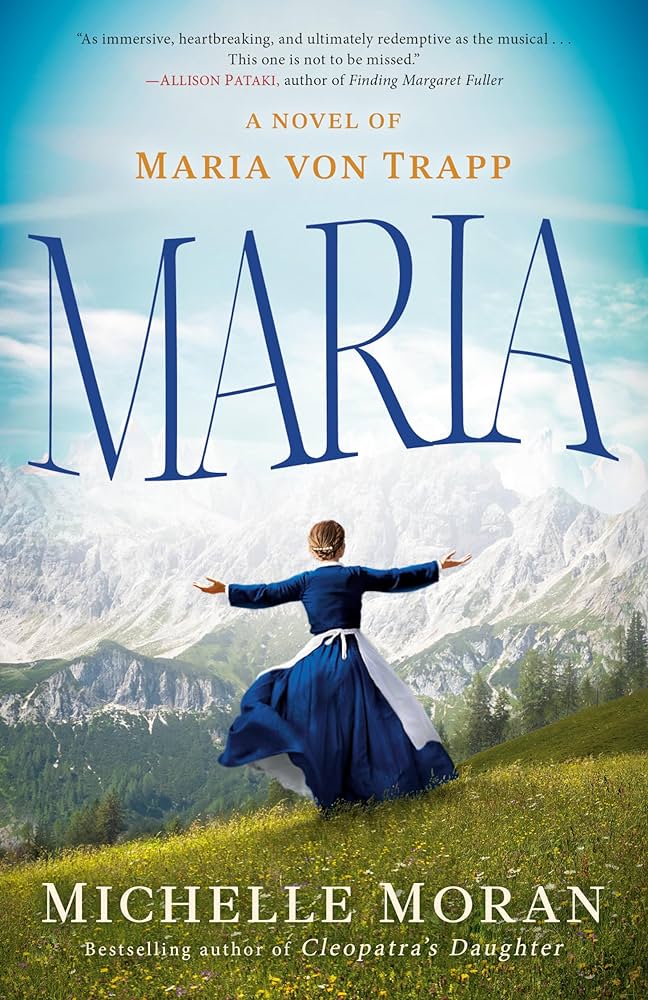
Maria

Maria: A Novel of Maria von Trapp by Michelle Moran

Fran, an aspiring writer, works for Oscar Hammerstein in 1959. He is completing the final songs for a new Broadway show, The Sound of Music, starring Mary Martin. Maria von Trapp, unhappy with the script, comes to New York City to request some changes. Fran is sent to take her to lunch and they end up meeting several times. Maria doesn’t like how her late husband Georg is portrayed as a stern parent and thinks that the whole second half of the show is pure fiction. Also, Liesl is really Rupert. Maria was the stricter parent, after being raised by her grandmother in her aunt and uncle’s home. Maria’s father was a musician, who gave her a guitar.

Fran’s story as a working girl in 1959 New York is also quite interesting, as is her romantic life. Maria shares highlights of her life story with Fran, who gets to know Maria and her youngest daughter, and takes detailed notes for Oscar, who is ill. The last song he writes for the show is “Edelweiss,” not actually an Austrian folk song. The real-life stories of Maria and the von Trapp family make for a compelling read, and should appeal to readers of biographical fiction or fans of The Sound of Music.

Brenda