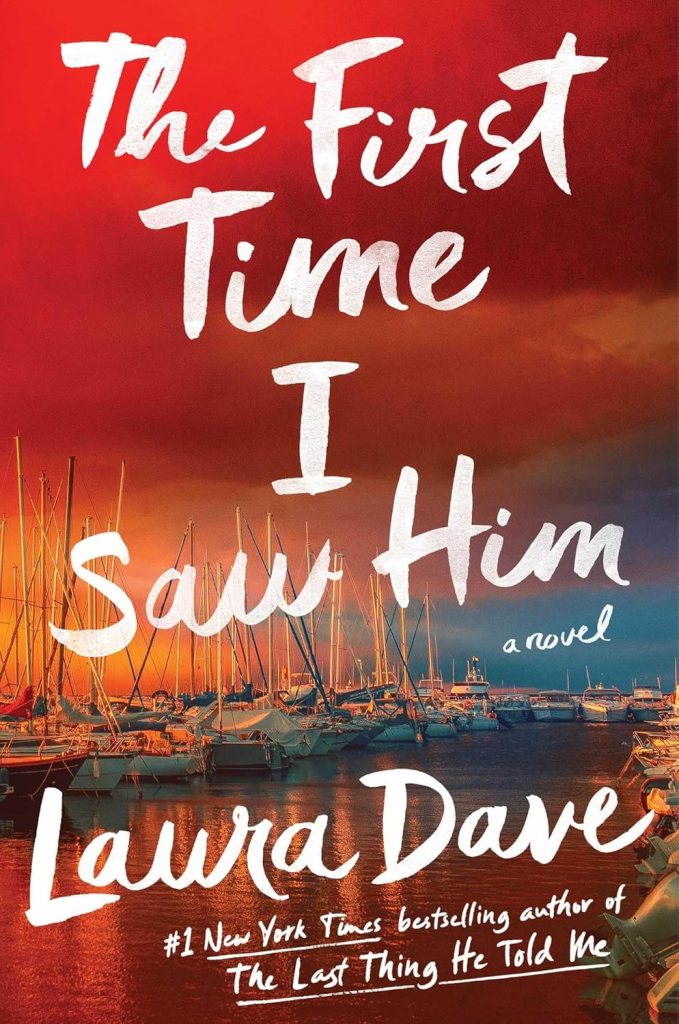
If you read the 2021 bestselling thriller The Last Thing He Told Me, this sequel is a sure bet. A thriller/beach read that you can’t put down, it is sweet, tender, tense, anxious, and full of plot twists with an intensifying pace. Don’t start this at bedtime or you won’t get much sleep!
Hannah and stepdaughter Bailey are a team, along with Bailey’s grandfather Nicholas, who has not always done the right thing. Owen, Bailey’s dad, disappeared several years ago, to keep them safe. Hannah and Bailey go on a journey together, sudden but not unexpected. They learn that Bailey’s grandfather has died, and they are no longer safe. Going back and forth in time, we learn that Nicholas and Owen worked together to make contingency plans to protect Bailey. While this is a plot-driven novel, the settings really enhance the story, moving from the California coast to Miami, Hawaii, Paris, and the south of France. Love and loyalty are key here, along with figuring out who is trustworthy and when it’s time to move on. The love of family, the emotions of missing loved ones, and very appealing main characters make this memorable read well worth the thrill ride.
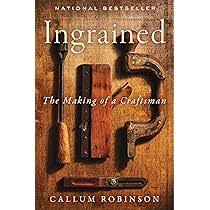
Ingrained: The Making of a Craftsman by Callum Robinson
This is a compelling memoir by a Scottish furniture maker and his wife Marisa, an architectural designer. They run a business making high end products for commercial showrooms, and have a huge job get cancelled at the last minute. Going back to his roots, Callum visits woodlots and gets to work in the workshop, to make custom furniture. Callum and Marisa have three full-time craftsmen to keep in work. They open a small store to display their work in Linlithgow. Callum even asks his dad, David, who taught him the craft, for help. Callum and the guys make beautiful and very expensive furniture, then need to find people who will love and then buy their work, or commission new pieces. I have had some relatives who enjoyed working with wood, but nothing large, and have no personal experience other than holding boards and fetching tools, but this book made me appreciate the challenges and the high level of craft that go into making beautiful wood furniture.
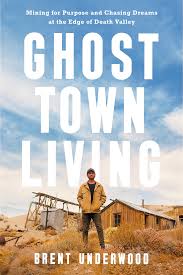
Ghost Town Living: Mining for Purpose and Chasing Dreams at the Edge of Death Valley by Brent Underwood
This remarkable memoir is set in the 2020s. Brent has a hostel in Austin, Texas, and his family lives in Florida. Somehow, with other financial backers, he buys a ghost town named Cerro Gordo, elevation 8500 feet, four hours from Los Angeles on the edge of Death Valley. Cerro Gordo is at the end of a terrible steep, winding road, and has no running water, but it does has a view of Mt. Whitney as well as Death Valley—the highest and lowest places in the continental United States. The town grew up around a mine, where silver, nickel, and lead were found, and Brent finds a bunch of old buildings still standing, including a hotel and a bunkhouse. There are petroglyphs and an ancient bristlecone pine nearby.
Brent, with some locals and many, many volunteers, must figure out how to explore the area safely, restore some of the buildings, and find a way to get water to the town. He also has some health challenges, partly from stress and overwork, but gains perspective from his friend Tip, who’s nearing the end of his life and loves to spend time in Cerro Gordo. I learned that the author narrated the audiobook version in the quietest place he could find: a cozy alcove in the mine. Compelling reading that almost makes me want to visit Cerro Gordo and Death Valley.
I have read Abbi’s five other novels, beginning with The Garden of Small Beginnings, and loved most of them. They tend to have an ensemble cast with quirky, big-hearted main characters. This novel has an outrageous plot, complete with twists and turns, and is occasionally laugh-out-loud funny.
Christa Barnet is the youngest daughter of Denise and the late Jasper Liddle. As a child, she sometimes appeared on television with one of her parents, usually holding a cute animal. Now she is a marine biologist on a remote island in the Indian Ocean, studying sea snails. Summoned back to Los Angeles along with her older sisters, Christa learns that her father has reappeared in Alaska, where his plane crashed when she was 2. Before rejoining his family, Jasper first appears on a popular talk show.
Christa hasn’t spent much time recently with her mom and sisters and doesn’t remember her dad. She does remember the trials of being a slightly famous teen, and is haunted by memories of a Hollywood party at which she was handed a drugged drink. Family friend Nate Donovan comes to the rescue, then and now. He is very handsome and doesn’t mind that Christa is prickly, short, and has many tattoos of marine life.
An over-the-top storyline with appealing main characters and cool settings in scenes set on the fictional island of Violetta, and on a merry-go-round, add to the book’s appeal. Also, there’s Marcel, the cute family dog, a bear cub named Dorothy, plus a gorgeous book cover. You don’t need an interest in snails or tide pools to enjoy this engaging novel, which is sure to be popular. I also enjoyed the illustrations by Julia Waxman. Readalikes include books by Emily Henry.
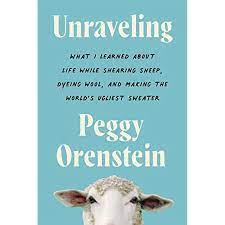
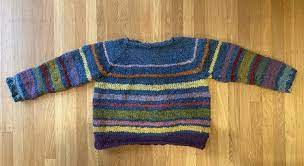
Unraveling: What I Learned About Life While Shearing Sheep, Dyeing Wool, and Making the World’s Ugliest Sweater by Peggy Orenstein
Craft, history, and memoir combine in the story of a writer in Northern California in 2020. Happily, this is not a memoir of Covid, but of living through a strange and different time. Peggy often traveled worldwide to research articles, but not in 2020. A longtime knitter who was taught by her mother, Peggy decides to make a sweater completely from scratch. Resourcefully, she finds a professional woman sheep shearer, and meets her at a farm to learn how to put all the online videos she’d watched into practice and manages to shear three sheep, even while wearing a face mask. The third sheep is named Martha, and it’s Martha’s wool Peggy intends to use to make her sweater.
Peggy cleaned and then carded the wool, a tedious task she often combined with video chats with her 94-year-old father in Minnesota, sometimes while they watched Three Stooges films together. Peggy bought a compact spinning wheel online, and had outdoor lessons on how to spin, and learned about the history of spinning. She shared the many words in English related to spinning, which was a major occupation of many women. Once she got the hang of it, Peggy enjoyed spinning Martha’s wool. Next, she turned to dyeing hanks of wool, starting with plant-based dyes, turning her backyard deck and writing studio into a smelly craft workshop her husband and older teen daughter stayed clear of. So much water was needed, for boiling the dye materials, soaking the wool, then repeatedly rinsing that Peggy was appalled. Her region was in a drought, and their hill top home was often at risk that year from wildfires. Sometimes she couldn’t leave the wool outside to soak or dry, or it would forever smell of smoke. Reading about the threat of wildfires put perspective on all the hazy days in the Midwest this past year, with wildfire smoke reaching us from many hundreds of miles away.
There is a whole chapter on blue dyes, including indigo and woad, and their histories. I was rather surprised Peggy chose to use insect or animal based red dyes, and didn’t consider leaving any of the wool undyed. Finally, it’s time to design her sweater with help via video consultations. While she easily picked her base color of blue, and then decided the order and placement of various colors of striped yarn, in the end Peggy doesn’t shape the sweater at all to follow the contours of her body, keeping it very boxy. This isn’t what many sweater designers would do, but Peggy shares her very personal reasons.
Then she knits, and knits, occasionally unraveling whole sections, ending with a colorful striped sweater made of three pounds of wool, too heavy and warm for her climate. Maybe she was thinking of wearing it on visits to her home state of Minnesota, though when she was finally able to fly to visit her father in 2021, it wasn’t sweater season. Then her daughter is off to college and Peggy starts work on this book, returning to her favorite craft of all; writing. While I wish she hadn’t referred to her sweater as ugly, I thought the book was a compelling read of her real-life story of crafting with wool in 2020. Fabric: The Hidden History of the Material World by Victoria Finlay is a good readalike.

 Book Girl & Little Bear