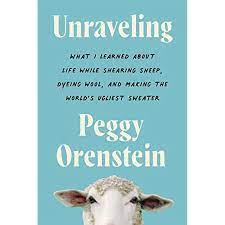
Unraveling: What I Learned About Life While Shearing Sheep, Dyeing Wool, and Making the World’s Ugliest Sweater by Peggy Orenstein
Craft, history, and memoir combine in the story of a writer in Northern California in 2020. Happily, this is not a memoir of Covid, but of living through a strange and different time. Peggy often traveled worldwide to research articles, but not in 2020. A longtime knitter who was taught by her mother, Peggy decides to make a sweater completely from scratch. Resourcefully, she finds a professional woman sheep shearer, and meets her at a farm to learn how to put all the online videos she’d watched into practice and manages to shear three sheep, even while wearing a face mask. The third sheep is named Martha, and it’s Martha’s wool Peggy intends to use to make her sweater.
Peggy cleaned and then carded the wool, a tedious task she often combined with video chats with her 94-year-old father in Minnesota, sometimes while they watched Three Stooges films together. Peggy bought a compact spinning wheel online, and had outdoor lessons on how to spin, and learned about the history of spinning. She shared the many words in English related to spinning, which was a major occupation of many women. Once she got the hang of it, Peggy enjoyed spinning Martha’s wool. Next, she turned to dyeing hanks of wool, starting with plant-based dyes, turning her backyard deck and writing studio into a smelly craft workshop her husband and older teen daughter stayed clear of. So much water was needed, for boiling the dye materials, soaking the wool, then repeatedly rinsing that Peggy was appalled. Her region was in a drought, and their hill top home was often at risk that year from wildfires. Sometimes she couldn’t leave the wool outside to soak or dry, or it would forever smell of smoke. Reading about the threat of wildfires put perspective on all the hazy days in the Midwest this past year, with wildfire smoke reaching us from many hundreds of miles away.
There is a whole chapter on blue dyes, including indigo and woad, and their histories. I was rather surprised Peggy chose to use insect or animal based red dyes, and didn’t consider leaving any of the wool undyed. Finally, it’s time to design her sweater with help via video consultations. While she easily picked her base color of blue, and then decided the order and placement of various colors of striped yarn, in the end Peggy doesn’t shape the sweater at all to follow the contours of her body, keeping it very boxy. This isn’t what many sweater designers would do, but Peggy shares her very personal reasons.
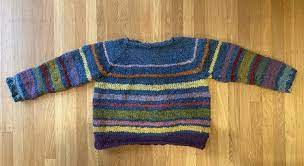
Then she knits, and knits, occasionally unraveling whole sections, ending with a colorful striped sweater made of three pounds of wool, too heavy and warm for her climate. Maybe she was thinking of wearing it on visits to her home state of Minnesota, though when she was finally able to fly to visit her father in 2021, it wasn’t sweater season. Then her daughter is off to college and Peggy starts work on this book, returning to her favorite craft of all; writing. While I wish she hadn’t referred to her sweater as ugly, I thought the book was a compelling read of her real-life story of crafting with wool in 2020. Fabric: The Hidden History of the Material World by Victoria Finlay is a good readalike.
Brenda
 Book Girl & Little Bear