The Great Divide

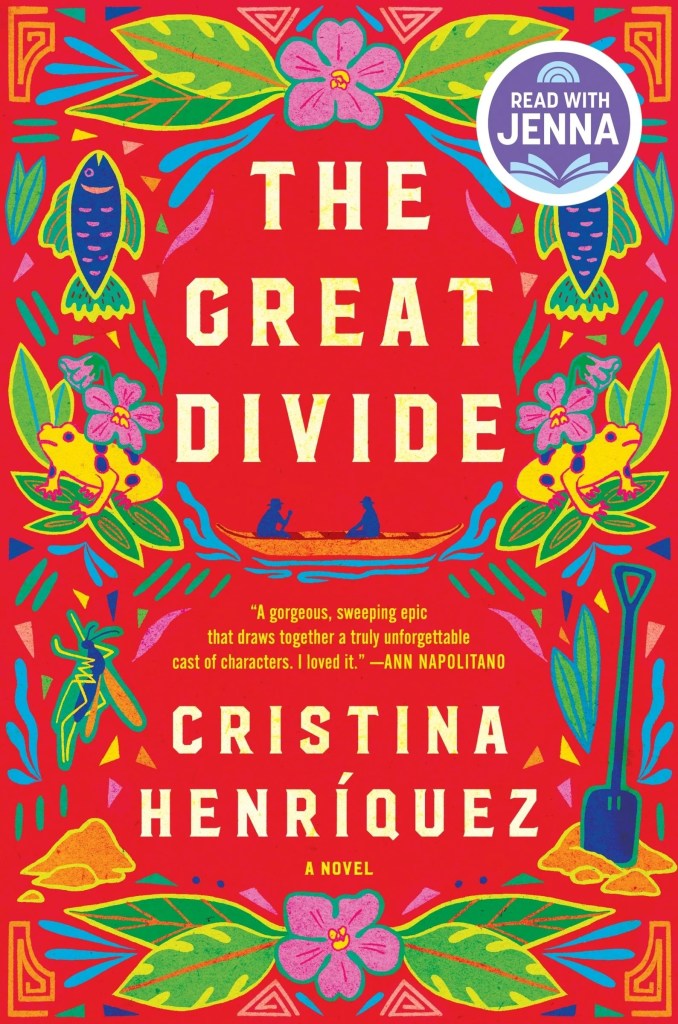
The Great Divide by Cristina Henríquez

This historical novel is set in 1907 in Panama and Barbados, during the building of the Panama Canal. It takes a while for the varied characters to have their stories connect, but individually they are interesting and the connections are intriguing. Fisherman Francisco Aquino sells the fish he catches to Joaquín. Francisco’s son Omar doesn’t like being out on the water. His mother apparently drowned many years ago. Omar goes to work on the canal, to the disapproval of his father. They don’t speak anymore, just eat dinner together then go to sleep. When Omar doesn’t come home for a few weeks, Francisco worries, but isn’t sure what to do.

Joaquín resells the fish she buys from the fisherman. His wife Valentina and her sister grew up in the town of Gatún, which is to be moved for the canal. Valentia takes Joaquín to Gatún for a visit, and wants him to start a protest.

The working conditions on the canal are terrible, though the men are made to take quinine to try to prevent malaria. Omar gets malaria anyway, and collapses. He is helped by Ada and a doctor. Ada Bunting, 16, comes from Barbados. She is looking for work in Panama because her sister needs expensive medical treatment. They grew up in a house that her mother had moved when she was a baby. Ada’s mother is a seamstress and dress designer. The doctor, John Oswald, is impressed by Ada, and hires her to tend his wife Marian, who is ill.

Eventually Omar returns home to his silent but very relieved father. There are more characters and plot twists, but the focus is on the canal and how it is affecting the workers and the villagers. I really enjoyed Henríquez’s contemporary novel The Book of Unknown Americans. The Great Divide is a compelling read, but not as memorable as I’d hoped. This is a Read with Jenna selection.

Brenda

The High Society Lady Detective Series

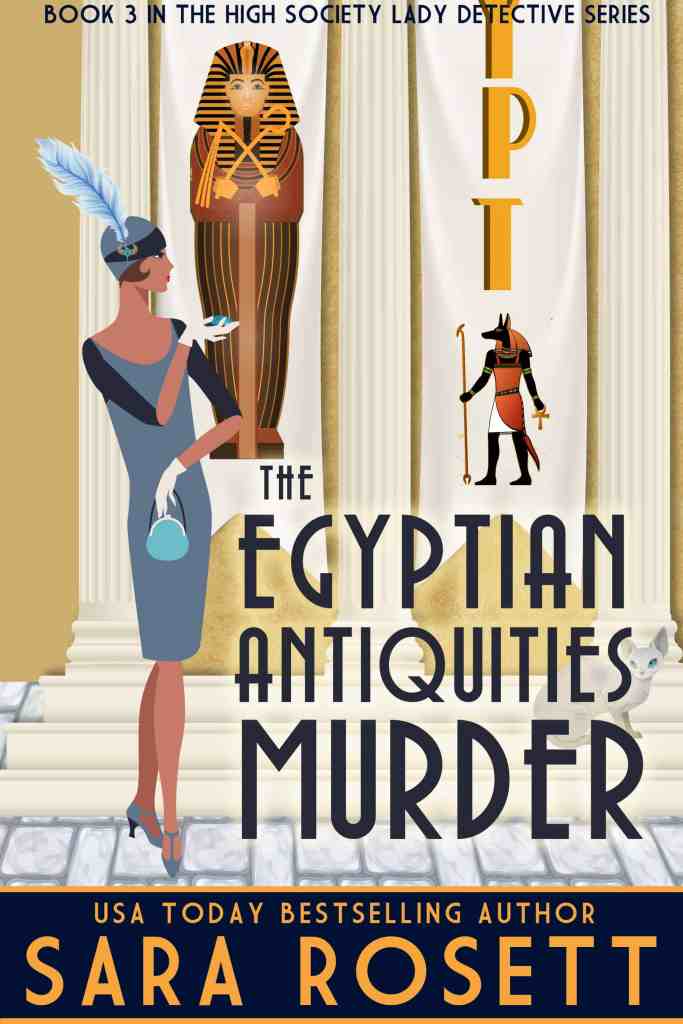
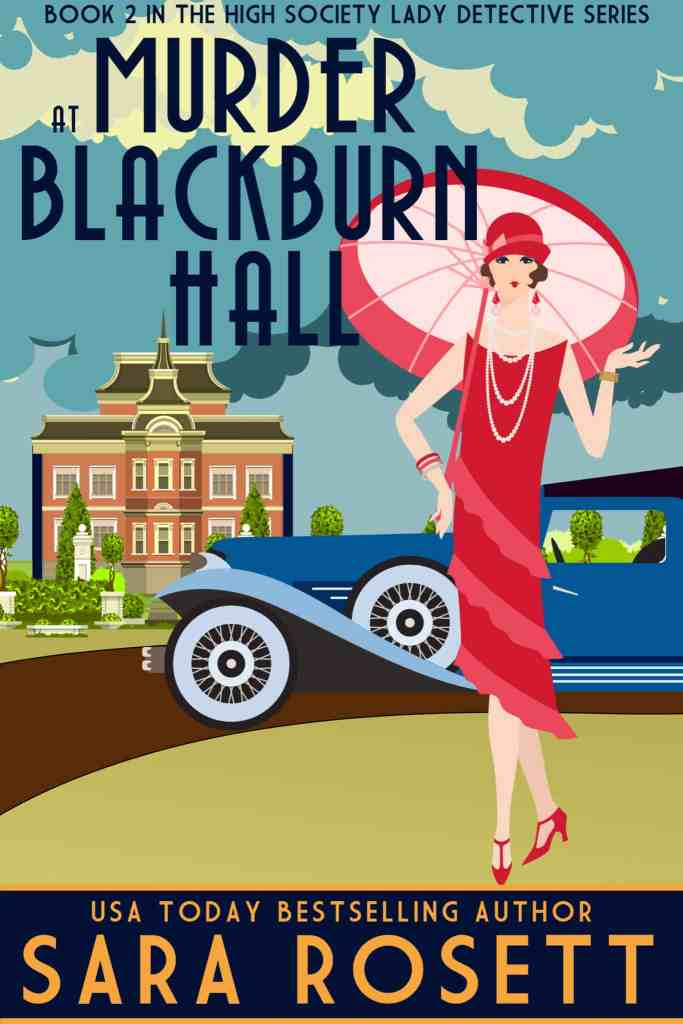
Murder at Archly Manor, Murder at Blackburn Hall, and The Egyptian Antiquities Murder by Sara Rosett

I’m always looking for new mystery series to read. I enjoy cozy and historical mysteries, and some British police procedurals but have started reading quite a few mystery books that are either too light and fluffy to keep my interest or written to a formula and not distinctive enough to be memorable. Other mysteries are darker than I’m in the mood to read. So, I’m happy to discover the High Society Lady Detective Mysteries by Sara Rosett. I’ve enjoyed her contemporary series featuring Ellie Avery, a military spouse and mother who has become an expert at organizing and moving, and talented at solving mysteries as well. There are already seven titles in this historical series featuring Olive Belgrave, and I was impressed by the first three titles. They are set in London in 1923, and in houses in the English countryside.

Olive is living in a boarding house in London, looking for steady work, when her aunt asks her to investigate the background of her daughter Violet’s fiancé Alfred Eton. With the help of her cousin Gwen (and Gwen’s hand-me-down gowns) and her friend Jasper Rimington, Olive sets out to uncover the mysterious Alfred’s past. An unfortunate accident during a fireworks show has Olive searching for a possible murderer.

The second book, Murder at Blackburn Hall, finds Olive back in London, with most of her sleuthing involving locating missing pets. Then a publisher contacts her to locate a missing mystery author, whose latest manuscript is overdue. The challenge is that no one knows what the author looks like. A body is found on the riverbank near Blackburn Hall, possibly an accidental death. There are a couple of big secrets for Olive, and occasionally Jasper to uncover, when not playing golf or attending formal dinners at the Hall. The setting is described in just enough detail, and I liked that Olive is smart, not unnecessarily putting herself in danger. The Egyptian Antiquities Murder, set at a large town house in London owned by an amateur archaeologist, is atmospheric without being spooky, and the mystery is quite clever. I actually listened to the audiobook of Blackburn Hall, with a very good narration by Elizabeth Klett, before I read the other two books, I look forward to reading the other books in the future.

Good Night, Irene

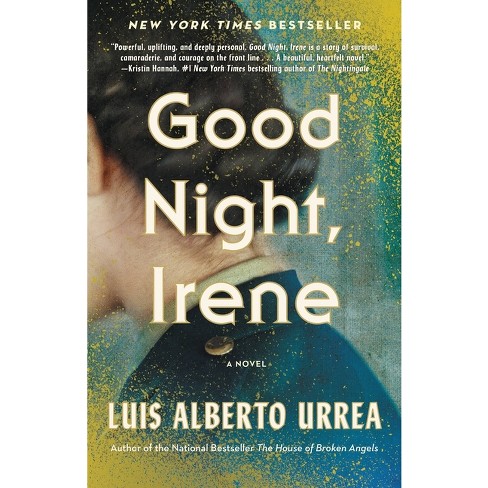
Good Night, Irene by Luis Alberto Urrea

This is stunning, emotional read. Inspired by the experiences of his mother Phyllis in World War II, the author did a lot of research with his wife and daughter in the United States and western Europe to tell the fictional story of Irene, Dorothy, and an assortment of Third Girls. Irene and Dorothy joined the American Red Cross in 1943 and traveled to England, France, Belgium, and Germany. Driving a truck called Rapid City, they provided comfort and cheer to the American troops, serving up coffee and donuts, playing records, and handing out gum candy and cigarettes. Sometimes they got too close to the front lines and had as much emotional trauma to deal with as the soldiers and aviators they supported. But there was camaraderie, romance, and occasional rest breaks in places like Cannes on the French Riviera.

While this is very different from Naperville author Urrea’s amazing book The House of Broken Angels, they are both compelling reads and unforgettable stories. Good Night, Irene is heartwarming, hard to put down, very grim in parts, and is vividly written. It was especially interesting to read after The First Lady of World War II, in which Eleanor Roosevelt visited Red Cross sites in the South Pacific. If your book group reads some historical fiction and is looking for their yearly World War II novel, this would be a good selection, along with Mrs. Porter Calling by A.J. Pearce. A fascinating epilogue and the author’s notes are a must read.

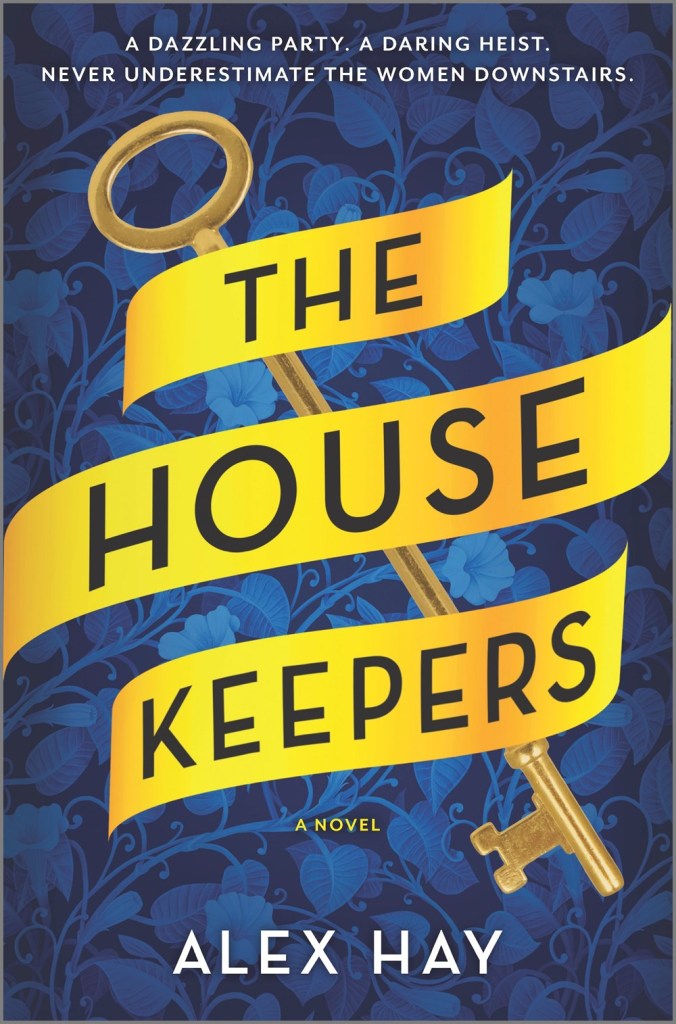
The Housekeepers

The Housekeepers by Alex Hay

This historical thriller is set in fashionable Mayfair, London in 1905. The DeVries mansion on Park Lane will be the location for a lavish costume ball in June, and possibly a grand heist to rival that of Ocean’s Eleven. The housekeeper, Mrs. King, has just been fired. She has an unexpected connection to the recently deceased Wilhelm DeVries. Wilhelm was originally Danny O’Flynn, who made his fortune the South African diamond trade, funded with a loan from his sister, Mrs. Bone. Winnie is the previous housekeeper, Alice is seamstress to Miss DeVries, Hephzibah is an actress, and Janes One and Two are temporary parlormaids as well as trapeze artists.

Previous maids have disappeared; perhaps they learned too many secrets, or were pregnant. The seven women, headed by Mrs. King, decide to clean the house of all its valuable contents the very same night of the ball. The costume ball is Egyptian themed, including camels, a miniature pyramid, and a water feature.

Can the women agree on an equal partnership, find the funds to hire specialized help, and come up with a detailed plan, as well as backup plans? Mrs. King must decide if the handsome footman William needs to be included, and what to do about the creepy Lord Ashley, possible suitor to Miss DeVries. The ball and the heist are both astounding, and well detailed. Neither the ball or the heist goes to plan, of course, and very important guests might arrive just as the heist is taking place.

Very cleverly plotted and entertaining, with an intensifying pace. Although I don’t believe film rights have been sold, this debut novel would be visually stunning and very witty as a movie.

Brenda

Courting Dragons

Courting Dragons: A King’s Fool Mystery by Jeri Westerson

This historical mystery is set in Greenwich, London, at the court of King Henry VIII, in 1529. Yes, that Renaissance King Henry. Court Jester Will Somers is in his mid-20’s and has challenging work, entertaining the King and his court, tumbling, making music, sharing gossip, teasing the nobility, and also being a good confidant for the young king, who he calls Harry or Uncle. Will was a real person, and was a jester for King Henry and even young Queen Elizabeth, and had his portrait painted at least twice. This is the first book in a planned series.

Many of the book’s characters are fictions, including Lady Marion, an embroideress who Will loves. Will also likes men, dallying with a servant and a visiting Spaniard. This secret is dangerous, and he could be blackmailed. As this is a mystery, Will also turns sleuth, when one man is killed, someone else is attacked, and Marion is almost killed. Was Marion the target, or was it one of Anne Boleyn’s ladies in waiting. Anne is not yet queen, as Henry is still married to Catherine of Aragorn, his first wife. The colorful daily life of Henry’s court comes to life, especially as a fool can go almost anywhere. This mystery really kept my interest, and I look forward to reading a sequel.

Readalikes include Thirteenth Night by Alan Gordon, the first of six Fool’s Guild mysteries and A Play of Isaac by Margaret Frazer, the first of seven mysteries featuring Joliffe.

The Bookbinder

The Bookbinder by Pip Williams

Peggy Jones, 21, and her twin sister Maude fold and gather sections of books at the Oxford University Press before and during World War I. They live on a narrowboat moored on a canal, with friends on a nearby boat.

Peggy is occasionally scolded for reading the pages as she folds them, and enjoys bringing home sections of books that weren’t good enough to bind.

Maude loves to fold paper, and makes paper stars at home. She doesn’t talk much, mostly echoing phrases she hears other people say. Lotte, a Belgian refugee, starts working at the binder. She finds Maude’s company soothing, so that Peggy can volunteer, along with posh Gwen, to read to injured soldiers, including Bastian, a gravely injured Belgian.

Suffragette Tilda, their late mother’s close friend, volunteers as a nurse’s aide and is sent to a hospital near the front. Her letters to Maude and Peggy, sent through an acquaintance to avoid the censors, keep them informed about life on the front. The war and the influenza epidemic certainly do not make for cheerful reading, but the characters, setting and plot really drew me into the story.

This book made me want to visit Oxford again, or at least reread Gaudy Night by Dorothy Sayers. Peggy seems real—her dreams, struggles, good and bad choices, and her daily life. Tiffany Girls by Shelley Noble is a good readalike. This was a remarkable read, and will be published later in July.

Mrs. Porter Calling

Mrs. Porter Calling: The Emmy Lake Chronicles, Book Three by AJ Pearce

In London in 1943, Bunty and her friend Emmy are living in a large house belonging to Bunty’s grandmother. Soon they invite Thelma, who works the switchboard with Emmy at the Fire Service, to move in, along with her three lively children, George, Margaret, and Stanley. Thelma’s husband is oversea with the British Navy, while Emmy’s new husband Charles is with the Army in North Africa.

The house has a large yard with a rundown shed where the kids hope to keep a guinea pig, and possibly chickens. Harold, a family friend, helps fix up the shed. Thelma and Emmy hope that Harold and Bunty will become more than friends.

This all sounds like a very cheerful and charming World War II home front novel, and it is, in parts. However, Emmy’s day job, as an advice columnist for Woman’s Friend magazine, where her kind brother-in-law Guy, is the editor, is increasingly stressful. The magazine has a glamorous new owner, the Honourable Cressida Porter, who sweeps into the magazine office with her tiny dog, planning to modernize the magazine and the office to be more fashionable and upbeat. The staff, with one exception, are horrified and try to keep the practical content and advice their faithful readers love.

Then the war again leaves its mark, with a sudden death. A wonderful group of friends and family take care of each other in the aftermath while the magazine staff make a stand. Heartwarming and compelling reading, but sadder than Yours Cheerfully (Book 2), though not as tense as Dear Mrs. Bird (Book 1).