The Editor

The Editor: How Publishing Legend Judith Jones Shaped Culture in America by Sara B. Franklin

Editor Judith Jones lived to be 93 and didn’t retire from Knop until she was 85. She edited many, many books and enjoyed many lunches with her authors. A couple of years in Paris as a young adult just after World War II inspired a love of food, cooking, and travel. Judith joined Knopf when it was rare for a woman to work in publishing as anything other than a secretary. When she became an editor, she worked very long hours, and became known as a passionate editor with a firm but delicate touch. She specialized in editing literary fiction, poetry, and food writing.

She married Dick Jones and they lived in New York City and Vermont. Dogs, swimming, music, poetry, and books filled their days. Infertility was a lifelong grief, though two stepchildren and later two older foster children expanded their family. Julia Child, Claudia Roden, Edna Lewis, and James Beard were some of the authors she worked with on bestselling cookbooks. The changing tastes in America for food and cookbooks is a major theme in this book. Also, quite a lot about being an underpaid woman in publishing, as well as growing old gracefully. Quite an interesting read, especially for foodies or avid cooks.

Brenda

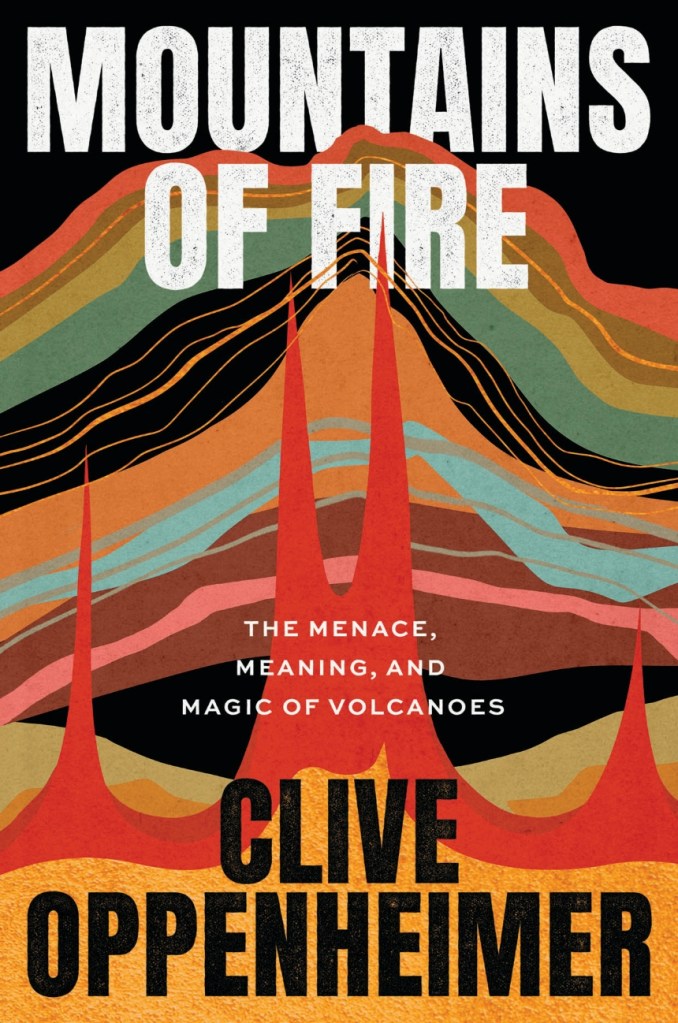
Mountains of Fire

Mountains of Fire: The Menace, Meaning, and Magic of Volcanoes by Clive Oppenheimer

I was fascinated by this compelling mix of science, history, volcanoes, and real-life adventure. Unlike other books about volcanoes, only part of this one focuses on disastrous volcanic eruptions. The author, a professor of volcanology at the University of Cambridge, learns and shares about the challenges of timing an evacuation order, which is very costly, especially since a volcano could erupt off and on for more than a year. He also shares that volcanoes add to their environment; they’re not just destructive. The volcanoes even seem to have different personalities.

Clive has explored volcanoes in Antarctica, the Sahara Desert, North Korea, the Mediterranean and the Caribbean, and Iceland, and gives a good sense of place during each expedition, the instruments used to measure volcanic gases and how they’ve changed (his specialty). Repeated visits to volcanoes in North Korea and Antarctica are especially meaningful to him. When younger and less experienced, he took some risks that he learned from. Historical expeditions to volcanoes are described, as well as volcanoes in myth and legend. Prehistoric tools found near volcanoes, especially those made from volcanic obsidian, intrigue him.

This is a captivating and engaging study of volcanoes, and the author clearly wants to share the joy and wonder of his work. For glimpses of the sights and sounds of several volcanoes, see The Living Earth, a short unnarrated documentary Clive made in 2022, here.

Brenda

Small Things Considered

Small Things Considered: Why There is No Perfect Design by Henry Petroski

Small Things Considered

I enjoyed this discussion of the design of everyday objects and why there are minor drawbacks to so many products, from cupholders to toothbrushes.

Why are the numbers arranged differently on phones and calculators or computer keypads? Why were toothbrushes made that didn’t fit into traditional toothbrush holders? Who decides the height and location of doorknobs and light switches? The history and design of many other products are considered, including paper bags, paper cups, filtered water pitchers, WD-40 and duct tape, desk chairs, supermarket layouts, and toll transponders. This book was published in 2003, so a few things are more nostalgic than current, but still interesting reading. The author has written many books, including a microhistory of the pencil, and was a professor of engineering and history.

I am including a longer quotation from pages 77-78, which you may find interesting, and I thought was very funny, for reasons I’ll share after the passage.

Arranging everything in the [car] trunk efficiently is always a challenge, but one that I enjoy. Perhaps all engineers delight in the challenge of packing a car trunk. A woman once told me about growing up in a family of five children: her engineer father may have taken the challenge to extremes. On vacations, each child was responsible for packing his or her own luggage, but only the father was allowed to put the bags in the trunk. Before setting out in a trip he would pack and unpack and repack the space until everything fit to his satisfaction. The bags were then tagged to identify their place. Each morning, the children were responsible for carrying their own luggage to the car and placing it on the ground, arranged according to its place in the trunk. The father would then pack the car for the day. I don’t recall being so obsessive on family vacations, but my wife and children may remember differently.”

My own father, also an engineer, wasn’t that organized or methodical, but he certainly was interested in fitting everything in or on top of the car for family camping trips.

I’ve also enjoyed reading The House with Sixteen Handmade Doors by the author, and will probably read more. He makes ordinary topics and objects quite interesting to read about.

Brenda

The First Lady of World War II

The First Lady of World War II: Eleanor Roosevelt’s Daring Journey to the Frontlines and Back by Shannon McKenna Schmidt

 In August and September of 2023, first lady Eleanor Roosevelt spent five weeks in New Zealand, Australia, and the South Pacific, at the request of the President. Eleanor was also appointed a special Red Cross delegate and asked to inspect American Red Cross facilities. Well known for her newspaper columns “My Day,” the first lady was 58 and her four sons were all in the armed forces. Much of her visit was kept secret, with most of her columns published after her return and labeled, somewhere in Australia or somewhere in the South Pacific. I was surprised to learn that she traveled without an aide or companion, or even a single dress. She wore only Red Cross uniforms in seersucker or wool, and packed her manual typewriter, wiring her columns to her editor in New York.

While touring hospitals, Red Cross stations, cities, villages, military bases, and camps, she tried to spend as much time as possible with women doing war work, hospital patients, and enlisted men. The author spent four years researching and writing this book, which was a compelling and educational read for me. Eleanor visited Christmas Island, New Caledonia, Guadalcanal, and Oahu, among other islands. She wasn’t allowed to visit New Guinea and had to ask repeatedly to visit Guadalcanal. While there was some controversy over her trip, her visits with the troops were reportedly much enjoyed, and she tried to send a note to the family of every hospital patient she visited. The trip was very hard on her; she lost quite a bit of weight and was exhausted and depressed for a while upon her return, as the hospital visits took a toll and the sights she saw on the islands, including makeshift cemeteries, made her sad. Her observations for the President led to some improvements in conditions for the troops; her columns about her 25,000 mile journey helped educate Americans about life for Americans in the south Pacific, and she most definitely boosted morale for many. This fairly short, well researched and inspiring read certainly enlightened me about events and conditions in New Zealand, Australia, and the South Pacific in 1943. You can read Eleanor Roosevelt’s “My Day” columns here.

Brenda

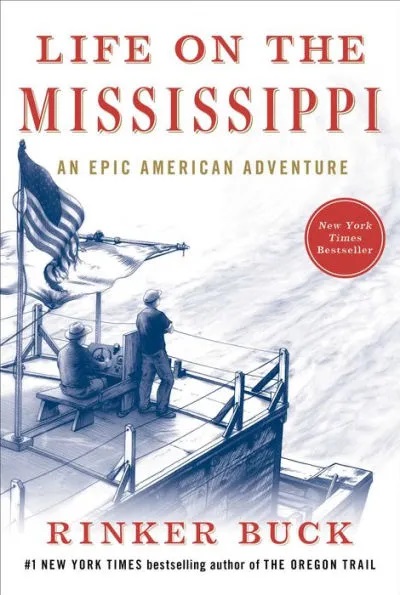
Life on the Mississippi

Life on the Mississippi: An Epic American Adventure by Rinker Buck

Perfect reading for armchair travel and history buffs, by the author of the entertaining The Oregon Trail. With lots of help and plenty of advice, both good and bad, Rinker takes a year to build the flatboat Patience. With a varied crew, Rinker spent four months in 2016 traveling the Ohio and Mississippi Rivers to New Orleans. Many people told Rinker that it couldn’t be done, especially navigating the mouth of the Wabash River and dealing with the commercial barge traffic on the Mississippi. Chapters about the Ohio River portion of the journey show his fondness for the journey, especially the kind folks he meets in Newburgh, Indiana, and other river towns. There are broken ribs and other mishaps, but Rinker is most worried about keeping the boat and its crew supplied with fuel and water. The Mississippi River is certainly more challenging to travel, including the rip rap embankments, but even there Rinker encounters helpful tug and barge captains. This is a compelling, memorable, and sometimes lighthearted tale.

Brenda