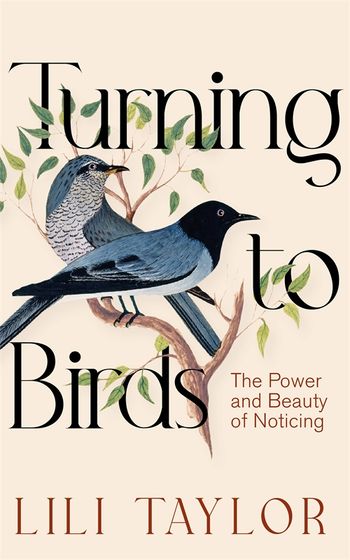
Turning to Birds: The Power and Beauty of Noticing by Lili Taylor
Actor Lili Taylor, who lives in Brooklyn and upstate New York, has been a birder for about fifteen years. She took a break from work and started hearing, then seeing birds all around her. Most of her observations are in New York City or on location where she’s working, with a few trips just to bird, often in company with other birders.
Each chapter is an insightful essay about her experiences with a different species of bird, beginning with pigeons. Each type of bird features an illustration by Anna Koska. The book begins with Lili as a novice birder, eager to learn about and observe more birds in their natural habitats, from Brooklyn parks to Albuquerque and Santa Fe, with birding trips to northern Ohio and the Platte River in Nebraska to see sandhill cranes. Each chapter has just the right amount of description to make me feel as if I’m sharing her birding experience. Her writing about the sandhill cranes sent me to maps and online to see just where and when the cranes spend time on their great migration, as I’ve seen them in smaller numbers in Illinois and Indiana.
I only differ from Lili in my fondness for house sparrows, for which she has a strong dislike, as they are aggressive towards eastern bluebirds. Fair, but I don’t see any bluebirds in my area. A slightly melancholy essay is set in Lombard, Illinois, featuring swifts which roost in tall chimneys. Lili has turned her newfound love of birds into a passion, and now serves on the boards of three birding organizations. I really liked how birding made her feel alive and at home in new and temporary work locations.
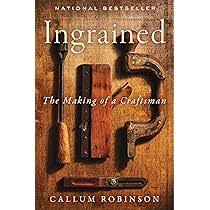
Ingrained: The Making of a Craftsman by Callum Robinson
This is a compelling memoir by a Scottish furniture maker and his wife Marisa, an architectural designer. They run a business making high end products for commercial showrooms, and have a huge job get cancelled at the last minute. Going back to his roots, Callum visits woodlots and gets to work in the workshop, to make custom furniture. Callum and Marisa have three full-time craftsmen to keep in work. They open a small store to display their work in Linlithgow. Callum even asks his dad, David, who taught him the craft, for help. Callum and the guys make beautiful and very expensive furniture, then need to find people who will love and then buy their work, or commission new pieces. I have had some relatives who enjoyed working with wood, but nothing large, and have no personal experience other than holding boards and fetching tools, but this book made me appreciate the challenges and the high level of craft that go into making beautiful wood furniture.
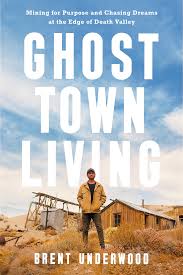
Ghost Town Living: Mining for Purpose and Chasing Dreams at the Edge of Death Valley by Brent Underwood
This remarkable memoir is set in the 2020s. Brent has a hostel in Austin, Texas, and his family lives in Florida. Somehow, with other financial backers, he buys a ghost town named Cerro Gordo, elevation 8500 feet, four hours from Los Angeles on the edge of Death Valley. Cerro Gordo is at the end of a terrible steep, winding road, and has no running water, but it does has a view of Mt. Whitney as well as Death Valley—the highest and lowest places in the continental United States. The town grew up around a mine, where silver, nickel, and lead were found, and Brent finds a bunch of old buildings still standing, including a hotel and a bunkhouse. There are petroglyphs and an ancient bristlecone pine nearby.
Brent, with some locals and many, many volunteers, must figure out how to explore the area safely, restore some of the buildings, and find a way to get water to the town. He also has some health challenges, partly from stress and overwork, but gains perspective from his friend Tip, who’s nearing the end of his life and loves to spend time in Cerro Gordo. I learned that the author narrated the audiobook version in the quietest place he could find: a cozy alcove in the mine. Compelling reading that almost makes me want to visit Cerro Gordo and Death Valley.
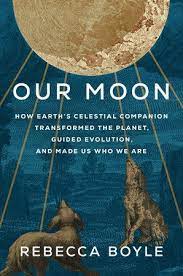
Our Moon: How Earth’s Celestial Companion Transformed the Planet, Guided Evolution, and Made Us Who We Are by Rebecca Boyle
This thought-provoking book is about the Moon and our connections to over millennia. The theories about how the Moon probably came to be are described, and there is lots of focus on how it helped us keep track of the seasons, tell calendar time, with descriptions of a number of monuments highlighting the Moon. Lighting the night sky was important, then learning the effect of the Moon on tides, mythology, Moon worship, early Moon viewing, lunar and solar eclipses are all covered. Moon exploration and possible near future exploitation are also topics. This book was a leisurely and engaging read for me. Part of it was read while looking forward to the total solar eclipse on April 8, in which the Moon gave us an opportunity to view the Sun’s corona. Here are a couple of photos from the eclipse, taken in Putnam County, Indiana, where you could also see Jupiter and Venus.
April 8, 2024 Solar Eclipse
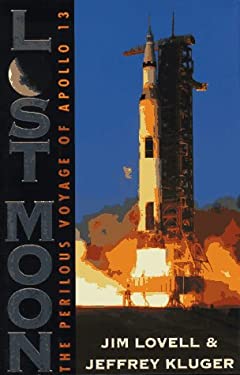
Lost Moon
Lost Moon: The Perilous Voyage of Apollo 13 by Jim Lovell & Jeffrey Kluger
Published in 1994, this is the true story of the Apollo 13 Moon mission that almost resulted in tragedy; a compelling read by Astronaut Jim Lovell. It was interesting to see how different challenges and solutions were presented differently in the popular 1995 film Apollo 13. Readalikes include Failure is Not an Option by Gene Kranz and Rocket Men by Robert Kurson about Apollo 8, Lovell’s first mission to the Moon.
The Plant Hunter: A Scientist’s Quest for Nature’s Next Medicines by Cassandra Leah Quave
This is a compelling memoir about a remarkable scientist. Cassandra Leah Quave, PhD, is an ethnobotanist who is a tenured professor of Dermatology and Human Health at Emory University in Atlanta, Georgia, and the curator of their herbarium. Every summer she and her family travel the world with her students to search for rare plant specimens that may have antimicrobial or other medicinal uses, and then process the plants for the herbarium. Over her career, she has traveled to the Amazon in Peru, Florida, a Mediterranean island, and to Ginestra in southern Italy, where she met her Spanish Italian husband, Marco.
An early staph infection sparked Quave’s interest in medicine, and a prosthetic leg has made her field research even more challenging. She and her husband are raising three children and a nephew, and cared for her grandmother. Quave makes a passionate plea for funding research of plants with possible medicinal value and for herbariums, and describes the daunting request process for grant money, and for tenure. I enjoy memoirs, especially of women scientists, and this is an outstanding true story. Her podcast is Foodie Pharmacology, and her websites are etnobotanica.us and cassandraquave.com.
Readalikes include Lab Girl by Hope Jahren, The Arbornaut by Margaret Lowman, and From Scratch: A Memoir of Love, Sicily, and Finding Home by Tembi Locke.
The French Art of Living Well: Finding Joie de Vivre in the Everyday World by Cathy Yandell
While not French herself, the author has a good idea of French life and what makes it special. Beginning at age 19, Cathy Yandell has made so many visits to France, mainly to Paris, that she’s lost count. Her two daughters attended school in Paris during three different years, and she’s accompanied many student groups to Paris, as well as doing research in France. Yandell is a professor of French language, literature, and culture at Carleton College in Minnesota. Also, not mentioned in this book, she’s been knighted by the French government.
Yandell shares many observations about how the French have a unique perspective on life. Her friends and acquaintances, many of them from French-speaking African countries, seem to take more time to savor life, from meals, coffee, walks, visiting museums and parks. Sometimes it’s about enjoying the moment with others, even strangers. During the pandemic, the French government greatly increased funding of arts and culture, resulting in numerous outdoor concerts and other entertainment in the summer of 2021, when Yandell was staying in Paris. She shares the experience of a special afternoon in a Paris park, listening to an actor read fiction aloud.
Lengthy Christmas and wedding feasts are described, although this is not a foodie memoir of France. Time at a traditional hammam, relaxing in the waters with a couple of women friends, is another happy memory. World Cup soccer, watched on TV in a bar, helped unite people. French literature, art, and philosophy are discussed, as well as the challenges of parenting a toddler in Paris. Yandell doesn’t strive to be French, but clearly loves the extended time she has spent there, adding up to several years over the past couple of decades. This is a pleasurable, leisurely read. Readalikes include The Good Life series by British expat Janine Marsh, especially My Four Seasons in France, and the novel Lucy Checks In by Dee Ernst.
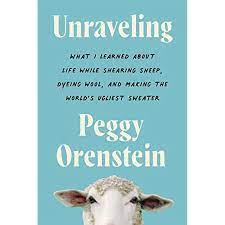
Unraveling: What I Learned About Life While Shearing Sheep, Dyeing Wool, and Making the World’s Ugliest Sweater by Peggy Orenstein
Craft, history, and memoir combine in the story of a writer in Northern California in 2020. Happily, this is not a memoir of Covid, but of living through a strange and different time. Peggy often traveled worldwide to research articles, but not in 2020. A longtime knitter who was taught by her mother, Peggy decides to make a sweater completely from scratch. Resourcefully, she finds a professional woman sheep shearer, and meets her at a farm to learn how to put all the online videos she’d watched into practice and manages to shear three sheep, even while wearing a face mask. The third sheep is named Martha, and it’s Martha’s wool Peggy intends to use to make her sweater.
Peggy cleaned and then carded the wool, a tedious task she often combined with video chats with her 94-year-old father in Minnesota, sometimes while they watched Three Stooges films together. Peggy bought a compact spinning wheel online, and had outdoor lessons on how to spin, and learned about the history of spinning. She shared the many words in English related to spinning, which was a major occupation of many women. Once she got the hang of it, Peggy enjoyed spinning Martha’s wool. Next, she turned to dyeing hanks of wool, starting with plant-based dyes, turning her backyard deck and writing studio into a smelly craft workshop her husband and older teen daughter stayed clear of. So much water was needed, for boiling the dye materials, soaking the wool, then repeatedly rinsing that Peggy was appalled. Her region was in a drought, and their hill top home was often at risk that year from wildfires. Sometimes she couldn’t leave the wool outside to soak or dry, or it would forever smell of smoke. Reading about the threat of wildfires put perspective on all the hazy days in the Midwest this past year, with wildfire smoke reaching us from many hundreds of miles away.
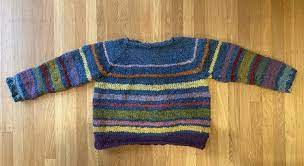
There is a whole chapter on blue dyes, including indigo and woad, and their histories. I was rather surprised Peggy chose to use insect or animal based red dyes, and didn’t consider leaving any of the wool undyed. Finally, it’s time to design her sweater with help via video consultations. While she easily picked her base color of blue, and then decided the order and placement of various colors of striped yarn, in the end Peggy doesn’t shape the sweater at all to follow the contours of her body, keeping it very boxy. This isn’t what many sweater designers would do, but Peggy shares her very personal reasons.
Then she knits, and knits, occasionally unraveling whole sections, ending with a colorful striped sweater made of three pounds of wool, too heavy and warm for her climate. Maybe she was thinking of wearing it on visits to her home state of Minnesota, though when she was finally able to fly to visit her father in 2021, it wasn’t sweater season. Then her daughter is off to college and Peggy starts work on this book, returning to her favorite craft of all; writing. While I wish she hadn’t referred to her sweater as ugly, I thought the book was a compelling read of her real-life story of crafting with wool in 2020. Fabric: The Hidden History of the Material World by Victoria Finlay is a good readalike.
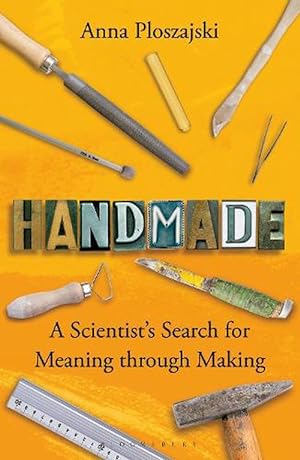
Handmade: A Scientist’s Search for Meaning through Making by Anna Ploszajski
British materials scientist Anna Ploszajski shares her explorations of making and using 10 different common materials, visiting experts around Great Britain and trying her hand at making ceramic mugs, a fireplace poker, and much more. Part exploration, part history, part science, and part memoir, sharing her own and her family’s stories, with humor and candor.
The materials covered are glass, plastic, steel, brass, clay, sugar, wool, wood, paper, and stone. Her Polish grandfather fled troubles as a toddler in Siberia and World War II in Europe, eventually opening a plastics business in England. In working with brass, Anna shares her decades long love with playing the trumpet. She has many sugary snacks and drinks during an attempt to swim the English Channel. Wooden spoons are carved, stone is worked, glass is blown, and a blanket is knitted during her travels. Tough times in grad school were eased by inexpertly throwing clay on a wheel with a fellow classmate, and now she learns to make two glazed ceramic mugs. A fireplace poker is made and later gifted. The chapter on stone reveals that she has had a fear of heights since childhood, and much of Great Britain is explored during her travels by bike, train, and a camper van named Allen.
Anna is also a stand-up comedian, talking about science, and an entertaining lecturer about various topics in science, including glassblowing. As Anna is an excellent storyteller, she really kept my interest in learning about all the different materials, and about her life as a scientist and now, maker.
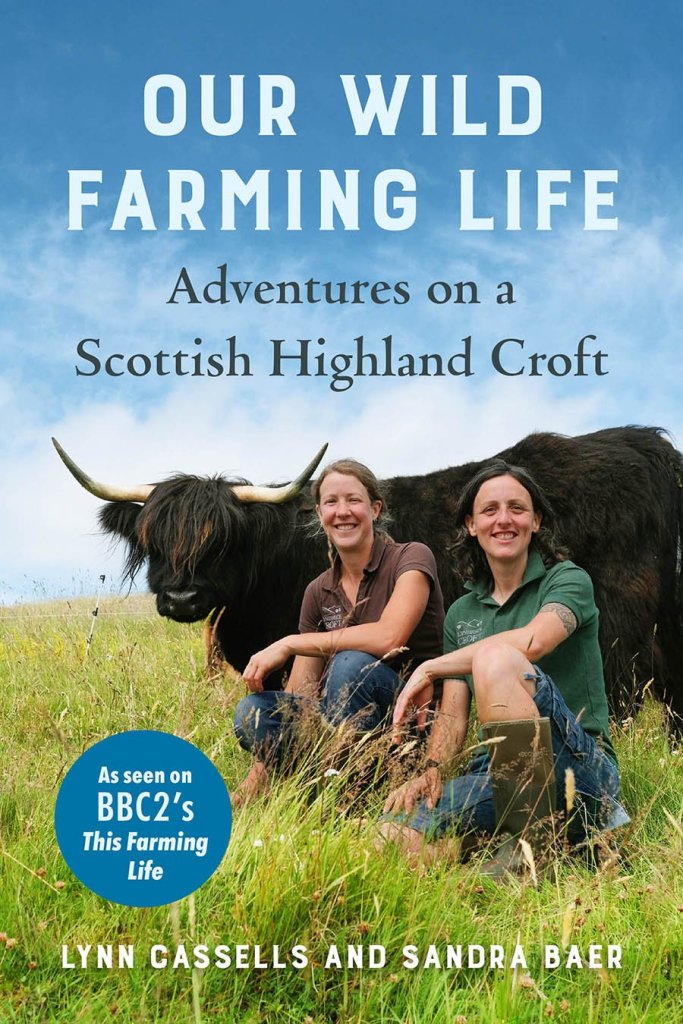
Our Wild Farming Life: Adventures on a Scottish Highland Croft by Lynn Cassells and Sandra Baer
Two women with no farming experience, one from Northern Ireland and one of Swiss and Scottish heritage, apprentice as Rangers for the National Trust. As a couple, they buy Lynbreck Croft in the Scottish Highlands, with gorgeous, hilly views. At first, they live on the croft and commute to work, but really want to live and work on their 150 acres of land. They plant many, many trees, and acquire some native breeds of chickens, pigs, cattle, bees, and briefly, sheep. Sandra and Lynn plant a large kitchen garden, and apply for grants and loans. It sounds like extremely hard work in a very scenic setting. Selling farm produce shares and later offering farm tours and classes and appearing on the 3rd season of BBC2’s This Farming Life, along with sales of this book, help make their vision a reality. It’s still just the pair of them, continuing the hard work of living close to their land. Inspiring, this was a quick, memorable read




 Book Girl & Little Bear