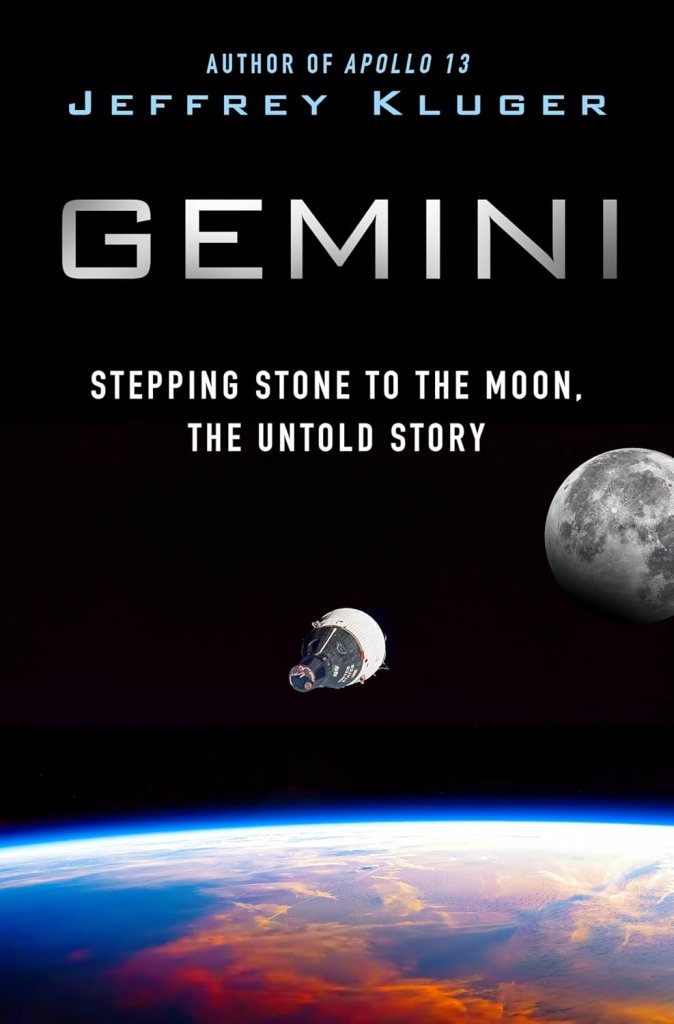
Gemini: Stepping Stone to the Moon, The Untold Story by Jeffrey Kluger
Mercury astronauts were first in space while Apollo astronauts went to the moon. Gemini, the NASA program in between, sometimes gets overlooked. Kluger, the author of Apollo 8 and Lost Moon: The Perilous Voyage of Apollo 13, tells the story of Gemini very well. The Gemini Project began in 1961 and was always meant to set the stage for the Apollo missions. The new spacecraft held two men (no mention here of the Mercury 13 women who hoped to be astronauts), used a larger rocket to launch, and included the first spacewalks and attempts to rendezvous with another spacecraft. Ten manned missions were launched in 1965 and 1966, which was truly unprecedented.
The names of many of the astronauts who flew the Gemini missions will be familiar to space buffs, including John Glenn, Neil Armstrong, Jim Lovell, and Gus Grissom, as well as flight directors Chris Craft and Gene Kranz. The quest to build the spacecraft did not go smoothly, and there was always the pressure of not enough time, trying to catch up and pull ahead in the space race with the Soviet Union. The flights themselves make for compelling reading, and the personalities of the astronauts and NASA engineers are memorably sketched. Very interesting and informative reading. Here’s one fun fact: NASA pronounces Gemini as “Geminee”.
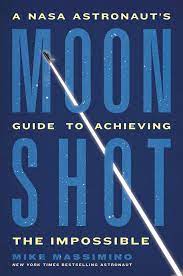
Moon Shot: A NASA Astronaut’s Guide to Achieving the Impossible by Mike Massimino
This book is an excellent combination of memoir and motivational writing. Mike applied to be a NASA astronaut three times, and failed. The third time he was close, but his vision wasn’t quite good enough. He was prescribed eye exercises by an optometrist, and managed to get accepted. Then he found out he needed to pass a long-distance swim test and a lifesaving test, and Mike didn’t swim as well as his 3-year-old. When he became part of the Astronaut Candidate group in 1996, he learned that a large part of their training was about team work, so the stronger swimmers spent time giving tips to Mike and the other weak swimmers.
Massimino, a mechanical engineer nicknamed Mass, was on two space shuttle missions to repair the Hubble telescope. His first trip to space was on Columbia, 11 months before its terrible accident. Mike writes about being a CapCom, talking with the astronauts stranded on the International Space Station after the Columbia accident, checking on their families, and talking them through basic station maintenance, as if they were doing weekend chores back home. He learned from astronauts like Alan Bean, who flew to the moon in Apollo 12. Some of his lessons from NASA that can apply to anyone’s life include: be amazed, build trust, accept ideas from your whole team, go slow and don’t make your mistakes worse. Ask for help, and learn from your mistakes. There are funny scenes and dramatic moments, in a compelling read from from someone who clearly loved working for NASA. Mike later appeared as himself on The Big Bang Theory, and is now a professor and public speaker.
The Plant Hunter: A Scientist’s Quest for Nature’s Next Medicines by Cassandra Leah Quave
This is a compelling memoir about a remarkable scientist. Cassandra Leah Quave, PhD, is an ethnobotanist who is a tenured professor of Dermatology and Human Health at Emory University in Atlanta, Georgia, and the curator of their herbarium. Every summer she and her family travel the world with her students to search for rare plant specimens that may have antimicrobial or other medicinal uses, and then process the plants for the herbarium. Over her career, she has traveled to the Amazon in Peru, Florida, a Mediterranean island, and to Ginestra in southern Italy, where she met her Spanish Italian husband, Marco.
An early staph infection sparked Quave’s interest in medicine, and a prosthetic leg has made her field research even more challenging. She and her husband are raising three children and a nephew, and cared for her grandmother. Quave makes a passionate plea for funding research of plants with possible medicinal value and for herbariums, and describes the daunting request process for grant money, and for tenure. I enjoy memoirs, especially of women scientists, and this is an outstanding true story. Her podcast is Foodie Pharmacology, and her websites are etnobotanica.us and cassandraquave.com.
Readalikes include Lab Girl by Hope Jahren, The Arbornaut by Margaret Lowman, and From Scratch: A Memoir of Love, Sicily, and Finding Home by Tembi Locke.
Atlas of a Lost World: Travels in Ice Age America by Craig Childs
In this engaging combination of armchair travel and popular science, author Childs gives readers a glimpse into the Americas during the last Ice Age, from about 30,000 to 11,000 years ago. In his travels across the Americas, especially Alaska, to explore key archeological sites, he travels alone or with assorted companions, including his mother, archeology students and their professor, and his two children. He kayaks in the north Florida swamps, camps overnight in below zero temps and on the way to Burning Man in the Black Rock Desert, finds mammoth footprints in the American West, and meets with scientists and Native scholars.
A number of questions are considered, not all of them answered. When and how did people arrive in the Americas? Did they walk across the Bering land bridge, and/or journey in skin boats along the coast? Did some people come from Iberia, now Portugal and Spain? What large animals did they encounter, and what did they eat? How did they travel during expanding and receding glaciers, and during sea rise? Tools and weapons were made from materials that were routinely carried for hundreds of miles, which indicated travel and trade. Mammoths and mastodons were common, then rare, and finally extinct as the climate changed. What was the significance of a mammoth hunt during different eras? Childs visits deserts, cliffs, caves, rivers, and coasts, describing how they look now, and what they probably looked like 11,000 to 25,000 years ago to early human travelers. Lots of research, amazing travels, and compelling writing make for a very appealing read. The illustrations by Sarah Gilman enhance the reading experience.
Readalikes include The Sun is a Compass by Caroline Van Hemert, Hudson Bay Bound by Natalie Warren, The High Sierra by Kim Stanley Robinson, and The River: A novel by Peter Heller.
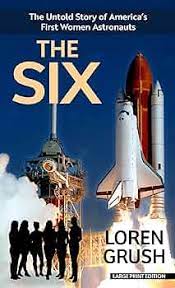
The Six: The Untold Story of America’s First Women Astronauts by Loren Grush
The NASA astronaut candidates of 1978 included six women who would all fly in near-earth orbit on the four space shuttles, before the construction of the International Space Station. The lengthy application and testing process is described in detail, along with the long wait to be selected for a space shuttle crew. Sally Ride became famous as the first American woman to orbit the earth, while Judith Resnick was better known for her second, ill-fated flight, on board Challenger in January, 1986. Sally was named to the the committee which investigated the Challenger disaster. Some information about the six was new to me, especially the stories of two women physicians, Anna Fisher and Rhea Seddon, who became pregnant and gave birth while waiting their turn to fly in space, and worked very close to their due dates and returned to work soon after. The six women, faced extra challenges due to their gender in a very male-dominated field, and added pressure from the media. This was great to read alternately with Orbital. Readalikes include The Mercury Thirteen by Martha Ackmann, Handprints on Hubble by Kathy Sullivan, and the novel The Calculating Stars by Mary Robinette Kowal.
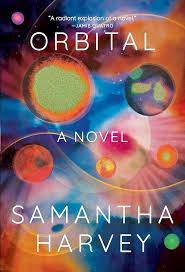
Orbital by Samantha Harvey
This beautiful, lyrical novel set a few years from now is a very memorable read, and will likely be nominated for multiple awards. It’s also short, and covers a single twenty-four hour day on the International Space Station. Four astronauts and two cosmonauts, from five countries, are several months into their overlapping nine-month stays on the station. The sixteen daily orbits around the planet reveal the beauty of the planet, the skies, and one massive typhoon heading for the Philippines, where Pietro and his wife met a fisherman and his family on their honeymoon. Chie learns that her mother has died in Japan. Their tedious daily exercise and tightly scripted work days contrast with the absolutely amazing sights including multiple sunrises, shared dreams, and relationships among the crew, their found family. The day described is also notable for another launch into space. Good Morning, Midnight by Lily Brooks-Dalton is a readalike for this excellent novel.
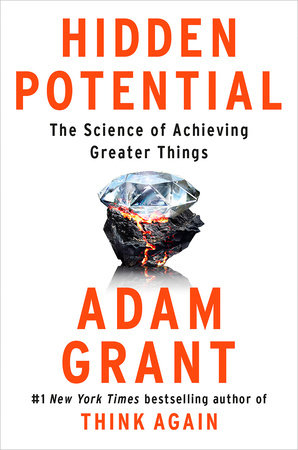
Hidden Potential: The Science of Achieving Greater Things by Adam Grant
Bestselling author Adam Grant is a profession of organizational psychology known for books such as Think Again, and Originals. Full of true stories about athletes, entertainers, a comedian, and chess masters, Grant’s premise is that many successful people don’t have a natural aptitude or early success in their fields. He encourages his readers, especially educators, to step outside their comfort zone, make plenty of mistakes, seek advice for how you can improve, and find ways to make your learning more interesting and fun. Full of engaging anecdotes and quite a bit about successful educational systems in countries like Finland, this practical and clearly written book is broad, but not very deep. Several chapters are intriguing enough to make their own book. Readalikes include books by Malcolm Gladwell, David Epstein, and Charles Duhigg.
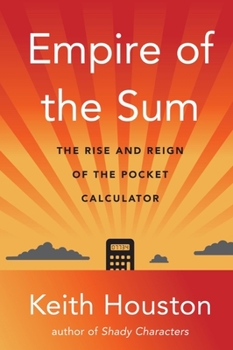
Empire of the Sum: The Rise and Reign of the Pocket Calculator by Keith Huston
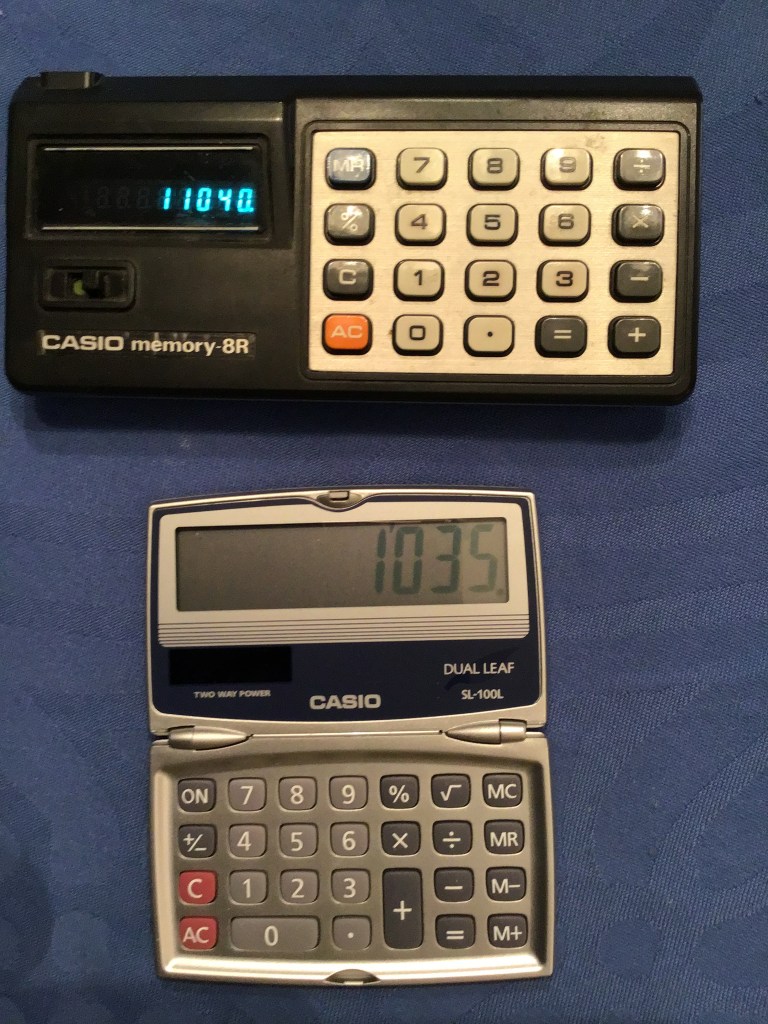
This isn’t just the history of the pocket calculator, but the history of counting, arithmetic, and mathematical calculations. Written for the general reader, I found this microhistory to be interesting and worthwhile, though not a quick read. Complete with illustrations and photographs, I learned about the various ways different cultures have counted by hand, some even including other body parts, such as the sternum, to count higher than 10 or 20. Then tally sticks, clay tablets and markers, leading up to the abacus. My parents had an abacus, but I don’t think any of us knew how to use it, so I was intrigued by the calculations it could do. The slide rule then came along, then very large calculation machines, followed by desk top calculators, like adding machines or early cash registers. The first pocket-size calculator was sold in 1971, and they were quite varied, from gold plate, to a digital watch with a calculator and an early stylus. I never used a graphing calculator, but their 3-inch screens must have been useful for mathematicians and engineers. Then came early financial software like VisiCalc, which helped sell many Apple II computers. Now we use calculators on smartphones and computers, but many pocket calculators from the 1970s and 1980s still work reliably. The Smithsonian National Museum of American History has a number of calculators in their collection, though not always on display, including a Casio Memory-8R, shown below along with another Casio in my home. The challenges of making the machines functional and ever smaller were numerous, and history buffs may enjoy this clearly written book.
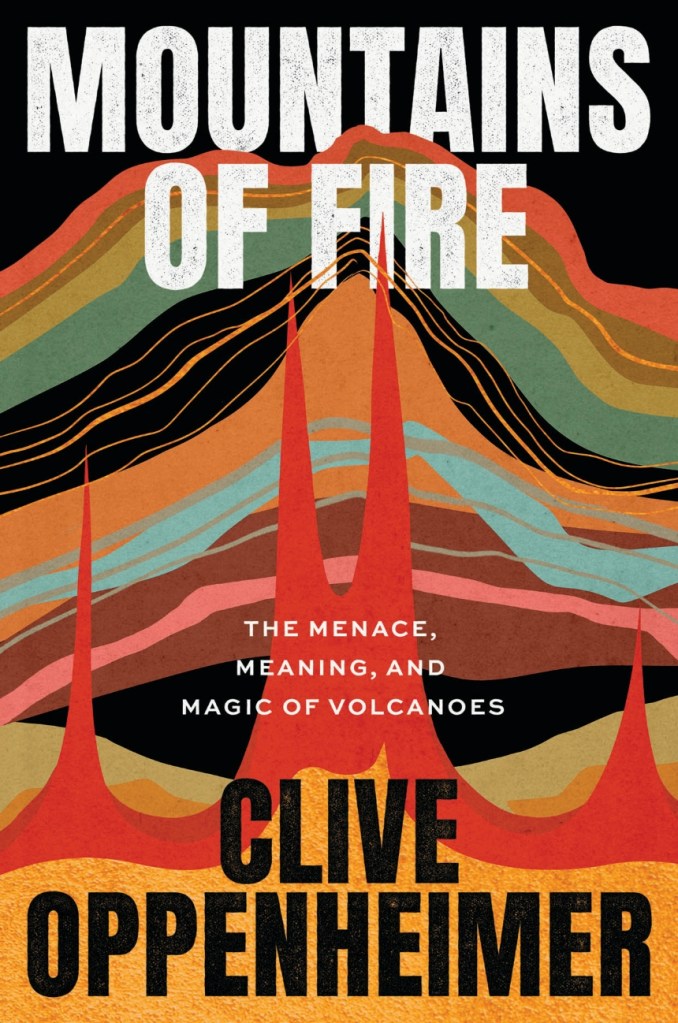
Mountains of Fire: The Menace, Meaning, and Magic of Volcanoes by Clive Oppenheimer
I was fascinated by this compelling mix of science, history, volcanoes, and real-life adventure. Unlike other books about volcanoes, only part of this one focuses on disastrous volcanic eruptions. The author, a professor of volcanology at the University of Cambridge, learns and shares about the challenges of timing an evacuation order, which is very costly, especially since a volcano could erupt off and on for more than a year. He also shares that volcanoes add to their environment; they’re not just destructive. The volcanoes even seem to have different personalities.
Clive has explored volcanoes in Antarctica, the Sahara Desert, North Korea, the Mediterranean and the Caribbean, and Iceland, and gives a good sense of place during each expedition, the instruments used to measure volcanic gases and how they’ve changed (his specialty). Repeated visits to volcanoes in North Korea and Antarctica are especially meaningful to him. When younger and less experienced, he took some risks that he learned from. Historical expeditions to volcanoes are described, as well as volcanoes in myth and legend. Prehistoric tools found near volcanoes, especially those made from volcanic obsidian, intrigue him.
This is a captivating and engaging study of volcanoes, and the author clearly wants to share the joy and wonder of his work. For glimpses of the sights and sounds of several volcanoes, see The Living Earth, a short unnarrated documentary Clive made in 2022, here.
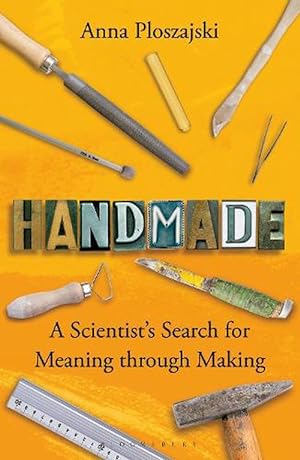
Handmade: A Scientist’s Search for Meaning through Making by Anna Ploszajski
British materials scientist Anna Ploszajski shares her explorations of making and using 10 different common materials, visiting experts around Great Britain and trying her hand at making ceramic mugs, a fireplace poker, and much more. Part exploration, part history, part science, and part memoir, sharing her own and her family’s stories, with humor and candor.
The materials covered are glass, plastic, steel, brass, clay, sugar, wool, wood, paper, and stone. Her Polish grandfather fled troubles as a toddler in Siberia and World War II in Europe, eventually opening a plastics business in England. In working with brass, Anna shares her decades long love with playing the trumpet. She has many sugary snacks and drinks during an attempt to swim the English Channel. Wooden spoons are carved, stone is worked, glass is blown, and a blanket is knitted during her travels. Tough times in grad school were eased by inexpertly throwing clay on a wheel with a fellow classmate, and now she learns to make two glazed ceramic mugs. A fireplace poker is made and later gifted. The chapter on stone reveals that she has had a fear of heights since childhood, and much of Great Britain is explored during her travels by bike, train, and a camper van named Allen.
Anna is also a stand-up comedian, talking about science, and an entertaining lecturer about various topics in science, including glassblowing. As Anna is an excellent storyteller, she really kept my interest in learning about all the different materials, and about her life as a scientist and now, maker.
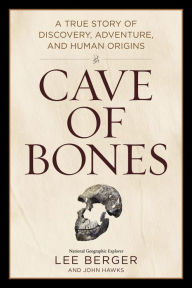
Real life adventure and popular science combine in this thrilling, controversial book. First, in 2008, paleoanthropologist Lee Berger was out hiking with his dog and his son Matthew, 9. He was looking for potential sites to excavate, when Matthew found a fossil, which turned out to be a new species of hominin, Australopithecus Sediba, dated to about 1.9 million years old.
Then, in 2013, three cavers exploring for Lee Berger found a very deep and all but inaccessible cave, later called the Dinaledi Chamber, where they took photos of what appeared to be hominin bones. Berger quickly organized a three-week excavation, advertising for slender paleoanthropologists who weren’t claustrophobic. I have been on guided walks in several caves, but I’ve never gone spelunking or caving, where you need a headlamp and the ability to crawl, climb and rappel through very tight passages. The Dinaledi Chamber was extremely hard to access, with a tight squeeze through one tunnel, a climb into another, and finally a twelve-meter chute to climb down, through which most climbers would get stuck. Then they went through another chamber and finally into the magnificent Dinaledi Chamber, with beautiful flowstone above, and fossils almost everywhere below. The fossilized bones of at least 15 individuals were found, and over 1000 bones.
As the fossilized bones were revealed, carried out to the surface and analyzed, they found they had discovered a new species, named Homo Naledi, later estimated to be 250,000 to 350,000 years old. The brain was very small, and the shoulders and upper arms were like a climber, but the wrists, fingertips, and feet were much less primitive, not unlike our own. Also, their teeth and the hardened calculus around them indicate that they ate some plants. They were probably about 5 feet tall, with long arms, and walked upright. The exciting part is that Berger and his team, including co-author John Hawks, found some evidence of fire, graves, art and possibly tools.
I watched a Nova documentary from 2015, Dawn of Humanity, about the work done up to that time, and read a couple of recent articles about their findings. While National Geographic is firmly backing Berger and his team’s work, other scientists don’t agree with all these findings, particularly that of fire, art, and tool use. It will be interesting to see what else is found in the Rising Star Cave system. One very exciting section details Berger’s quest to enter the cave himself. In his late fifties, he is tall and not slender, but loses about 50 pounds to make the attempt, during which he spots some markings outside the chamber. Does he get down the chute? I’m not saying, but on his way back out of the cave system, he almost gets stuck and was reportedly injured. Also, he deliberately didn’t tell his family about his attempt to enter the Dinaledi Cavern ahead of time. As teens, Matthew Berger and his sister Megan both successfully made the journey.
The finds in the Dinaledi Cavern, however controversial, are remarkable and make for a compelling and fascinating read. For those with Netflix, there’s a new documentary, Unknown: Cave of Bones. For more about paleoanthropology, I enjoyed First Steps: How Upright Walking Made Us Human by Jeremy DeSilva. For real life adventure and caving, there’s Into the Planet: My Life as a Cave Diver by Jill Heinerth.
The Underworld: Journeys to the Depths of the Ocean by Susan Casey
Journalist Susan Casey has long been fascinated by the ocean. She’s written books on sharks, rogue waves, and dolphins. Here she shares the joy and wonder she experiences while learning about and visiting the ocean depths. She travels around the globe interviewing scientists and explorers, including Don Walsh and Victor Vescovo. The book is full of photos of the weird, wonderful, and numerous creatures of the deep ocean.
It’s fun to read about her experiences at sea. Her first chance to dive in a submersible to the deep ocean comes in the Bahamas, where the 3-person Neptune goes to the bottom of the twilight zone, 1000 meters deep.
Another intriguing chapter involves the search for a Spanish galleon off the coast of Columbia, that was sunk in 1708, with a cargo full of treasure. The challenges of locating the ship, keeping that location secret, and obtaining funding and permission to raise the ship are detailed.
More sobering sections discuss the risks of plastic debris on the ocean floor and recent proposals for deep sea mining.
The most exciting chapters describe Case’s final chance to dive to the abyssal zone, over 5000 meters below the surface in a 2-person submersible, to the base of one of Hawaii’s underground volcanoes.
Armchair travel, popular science and real-life adventure combine in a compelling and informative read.



 Book Girl & Little Bear