Murder Among the Pyramids

Murder Among the Pyramids by Sara Rosett

A new historical mystery series from Rosett is always welcome news. I listened to the audiobook on Hoopla Digital, with excellent narrating by Elizabeth Klett. Rosett researched 1930s Egypt, lady explorers, and more to creating the first Lady Traveler in Egypt mystery, featuring Blix Windway and Hildy Honeyworth. Blix was introduced in the 6th High Society Lady Detective series, Murder on a Midnight Clear. The author intends to continue the earlier series.

Blix is a resourceful young woman, traveling the world, taking photos, and delivering lectures to women’s groups. Often, she works as a lady’s companion to fund her travels. Arriving in France after a rough channel crossing, Blix needs to find a new patron to cover her travel past Paris. In Paris, Blix and her new traveling companion, Hildy Honeyworth, participate in an exciting road race in Paris.

They travel on to Marseilles, Alexandria, and then to Cairo, Egypt. There is a death in a tent near the pyramids, and an Egyptian diary and expensive jewelry go missing. When society gossips start whispering that Hildy is a suspect, Blix investigates. With the help of reporter Mr. Denby and the scornful Mr. Heathcliff, who works with but not for the police, Blix finds many clues, and almost gets caught up in a street riot. Egypt of the 1930s is vividly described, and Blix is a very appealing amateur detective. I thoroughly enjoyed this mystery, which is wonderful historical armchair travel. I look forward to Blix and Hildy’s next adventure, on a trip down the Nile.

Brenda

A Walk in the Park

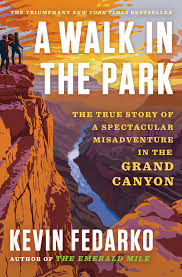
A Walk in the Park: The True Story of a Spectacular Misadventure in the Grand Canyon by Kevin Fedarko

Fedarko, inspired by a book his dad gave him, thought he’d explore the Grand Canyon by river. Interning with a river tour company, he only became skilled enough to row a supply raft which hauled trash. He learned to love writing about the canyon and other wilderness areas, traveling with National Geographic photographer Pete McBride.

At McBride’s suggestion, they embarked on an end-to-end traverse inside the Grand Canyon from east to west, in several different expeditions. For their first section, an experienced group of canyon explorers welcomes them for 12 days—they don’t even last a full week. Their backpacks are way too heavy and disorganized and they didn’t prepare for all the off-trail walking, hiking, climbing, or rappelling among the many layers of rock. Daily, there is the challenge of reaching a safe camping spot before dark, in case of flash floods, and always being on the lookout for the next source of water, however tiny. Then there’s the need to consume massive amounts of calories and taking care of their feet.

Through the generosity of more experienced hikers, Kevin and Pete prepared for their next venture into the canyon, with the support of still others caching their resupply buckets and driving them to and from the canyon’s rim. Gradually they make their way west, with breaks to plan the next hike or for Kevin to visit his ailing father. This story is told with much more depth than many other real-life adventures, including lots of the history and prehistory of the canyon and the people who lived there and the artifacts they left. They met with members of the Navajo and Havasupai tribes, and Fedarko relates both sides of the recent influx of thousands of tourists from Las Vegas visiting the western Grand Canyon by helicopter.

The stunning beauty of the inner canyon is well described, making readers understand the appeal of this often extremely hot and always challenging journey, which made a huge impact on the author. Peter McBride has published a book of Grand Canyon photographs and there is a National Geographic documentary about their journey, Into the Grand Canyon, neither of which I’ve seen, yet. Many photographs by McBride are included in A Walk in the Park. This is a memorable and enjoyable read for those who enjoy armchair travel or real-life adventure tales.

Brenda

Welcome to Glorious Tuga

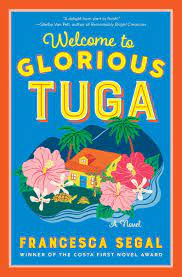
Welcome to Glorious Tuga by Francesca Segal

The fictional south Atlantic island of Tuga de Oro is inaccessible to ships for several months every year. Island Open Day is a cause for celebration, as it brings ships with long waited cargo, FFA (folk from away) and returning Tugans. Seasick Charlotte Walker arrives at Island Close, which is celebrated with fireworks. Charlotte is a young vet who is spending a year on Tuga to study gold coin tortoises. Tugan Dr. Dan Zekri is returning so his Uncle Saul can retire. At the same time, a mother leaves the island for a job and an 11-year-old is headed to boarding school. The family connections are a bit bewildering at first to Charlotte (the reader has a list of characters and how they’re related), but she gets a warmer welcome than Dr. Dan, especially when she is willing to use her veterinary skills as well as research the tortoises. Next comes Katie, a physiotherapist who’s more in love with island life than her Tugan sweetheart. Secrets, dramas, history, and the gorgeous island itself are all part of the storyline. This is a vivid, compelling read that is hard to put down.

Brenda

The Guncle Abroad

The Guncle Abroad by Steven Rowley

I loved reading The Guncle, and looked forward to reading more about Gay Uncle Patrick and his niece Maisie and nephew Grant, but sequels aren’t always as satisfying. This one is a winner. The settings are different, and the story is set five years later. It’s a vivid, bittersweet, joyous, funny, and engaging read.

Patrick takes his niece and nephew to Europe for a vacation before their father Greg’s upcoming marriage to Livia, an Italian marchesa. Maisie and Grant are now 14 and 11, and not as adoring of Uncle Patrick. They meet him in London, where Patrick is finishing up filming a movie. The kids get to visit the movie set, which they enjoy. Then they visit Paris, Austria for scenes from The Sound of Music, and then Venice, before traveling to a fancy hotel overlooking Italy’s Lake Como for the wedding festivities. The children want Patrick to talk his brother out of getting married, while Patrick tries to show them different aspects of love. He is jealous of the children’s connection to Palmina, Livia’s sister.

Patrick is 49, acting again, and single after a five-year relationship. He tries to share his wisdom with the kids, and strives to always be witty, funny, and the center of attention. The European setting is amazing, and the kids are great characters. There are a few cringey moments among the bittersweet and funny ones, with a surprise ending. If you liked The Guncle, this is a fine follow-up.

Brenda

The Plant Hunter

The Plant Hunter: A Scientist’s Quest for Nature’s Next Medicines by Cassandra Leah Quave

This is a compelling memoir about a remarkable scientist. Cassandra Leah Quave, PhD, is an ethnobotanist who is a tenured professor of Dermatology and Human Health at Emory University in Atlanta, Georgia, and the curator of their herbarium. Every summer she and her family travel the world with her students to search for rare plant specimens that may have antimicrobial or other medicinal uses, and then process the plants for the herbarium. Over her career, she has traveled to the Amazon in Peru, Florida, a Mediterranean island, and to Ginestra in southern Italy, where she met her Spanish Italian husband, Marco.

An early staph infection sparked Quave’s interest in medicine, and a prosthetic leg has made her field research even more challenging. She and her husband are raising three children and a nephew, and cared for her grandmother. Quave makes a passionate plea for funding research of plants with possible medicinal value and for herbariums, and describes the daunting request process for grant money, and for tenure. I enjoy memoirs, especially of women scientists, and this is an outstanding true story. Her podcast is Foodie Pharmacology, and her websites are etnobotanica.us and cassandraquave.com.

Readalikes include Lab Girl by Hope Jahren, The Arbornaut by Margaret Lowman, and From Scratch: A Memoir of Love, Sicily, and Finding Home by Tembi Locke.

Brenda

Hudson Bay Bound

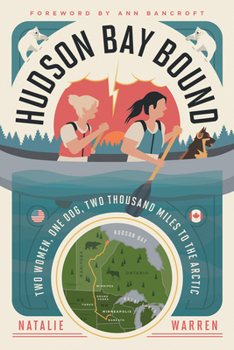
Hudson Bay Bound: Two Women, One Dog, Two Thousand Miles to the Arctic by Natalie Warren

In 2011, two Minnesota college seniors made a bold plan for the summer after graduation. Ann Raiho and Natalie Warren decided to canoe 2,000 miles from St. Paul, Minnesota to Hudson Bay in Manitoba, which had never been done by women. Natalie grew up in Miami, but went on long canoe trips in the Boundary Waters area of northern Minnesota as a teen, where she met Minnesotan Ann. They found out they were both planning to attend St. Olaf College in southern Minnesota, as I did, though quite a few years earlier. They were very experienced at long canoe trips, though always with a larger group. Planning and funding such a big expedition was challenging. Natalie had no firm plans or job offers after graduation, while Ann was due in Colorado in early September for graduate school.

At the beginning of June, 2011, they headed out on the flooded Minnesota River, traveling past many fields of corn and soybeans, ready for adventure. Three resupplies were planned, one with the help of Ann’s parents. Traveling through Minnesota, North Dakota, and Manitoba, they met a wide variety of farmers, villagers, and First Nations people. Along the way they saw deer, moose, caribou, eagles, wolves, beaver dams, black bears, many mosquitos and flies, and near journey’s end, polar bears. Also, they adopted a stray dog, Myhan, recommended for polar bear country.

There was lots of cribbage, music from ukelele and a travel guitar, dancing, very few showers, at least one day of not speaking, and many granola bars and pancakes. Ann had the idea for the journey, and Natalie was happy to go along, up rivers, through the vast Lake Winnipeg, and amazing scenery. Natalie sang jazz standards (which ones?) when nervous, which irritated Ann, who thought Natalie wasn’t serious enough about safety. Natalie, in turn, thought Ann made too many decisions without asking for Natalie’s input. Many rapids and portages made for an occasional grueling adventure. They got physically stronger during their 100-day journey, and their friendship survived, and even thrived. For photos and videos, visit Natalie’s website here.

Brenda

The Last Ride of the Pony Express

The Last Ride of the Pony Express: My 2,000-Mile Horseback Journey into the Old West by Will Grant

Readers who enjoy real life adventure, American history, armchair travel, or horses will likely enjoy Will Grant’s new memoir. The Pony Express, in which a letter could be delivered by horseback from St. Joseph, Missouri to Sacramento in a blistering 10 days, only lasted about 19 months from 1860 to 1861. In 2019, horse trainer and journalist Will Grant set out to ride the same 2,000-mile path. He planned to take 100 days, with two horses, riding one and leading the other with packs, riding four days, and resting one. Of course, the journey doesn’t go quite according to his plan, partly due to weather. The selection of the horses begins the tale, then Will sets out in early May, with an escort over the Missouri River bridge from St. Joseph, Missouri, into Kansas. Sensibly trailering his horses around a few cities on the route, Grant details life on horseback, the history and present state of the Pony Express stations, and the people he meets along the way. In a few arid locations, he has water and hay caches located for the horses. Grant rides his horses at a walk, not the gallop of the Pony Express, and he ponders how challenging it would have been for the Pony Express to keep enough horses ready at the stations, and supplied with enough feed and water for the horses and their handlers. Grant clearly loves horses and the American West, and is very good company for the journey. Rinker Buck’s The Oregon Trail and Life on the Mississippi are very good readalikes.

Brenda

Life on the Mississippi

Life on the Mississippi: An Epic American Adventure by Rinker Buck

Perfect reading for armchair travel and history buffs, by the author of the entertaining The Oregon Trail. With lots of help and plenty of advice, both good and bad, Rinker takes a year to build the flatboat Patience. With a varied crew, Rinker spent four months in 2016 traveling the Ohio and Mississippi Rivers to New Orleans. Many people told Rinker that it couldn’t be done, especially navigating the mouth of the Wabash River and dealing with the commercial barge traffic on the Mississippi. Chapters about the Ohio River portion of the journey show his fondness for the journey, especially the kind folks he meets in Newburgh, Indiana, and other river towns. There are broken ribs and other mishaps, but Rinker is most worried about keeping the boat and its crew supplied with fuel and water. The Mississippi River is certainly more challenging to travel, including the rip rap embankments, but even there Rinker encounters helpful tug and barge captains. This is a compelling, memorable, and sometimes lighthearted tale.

Brenda