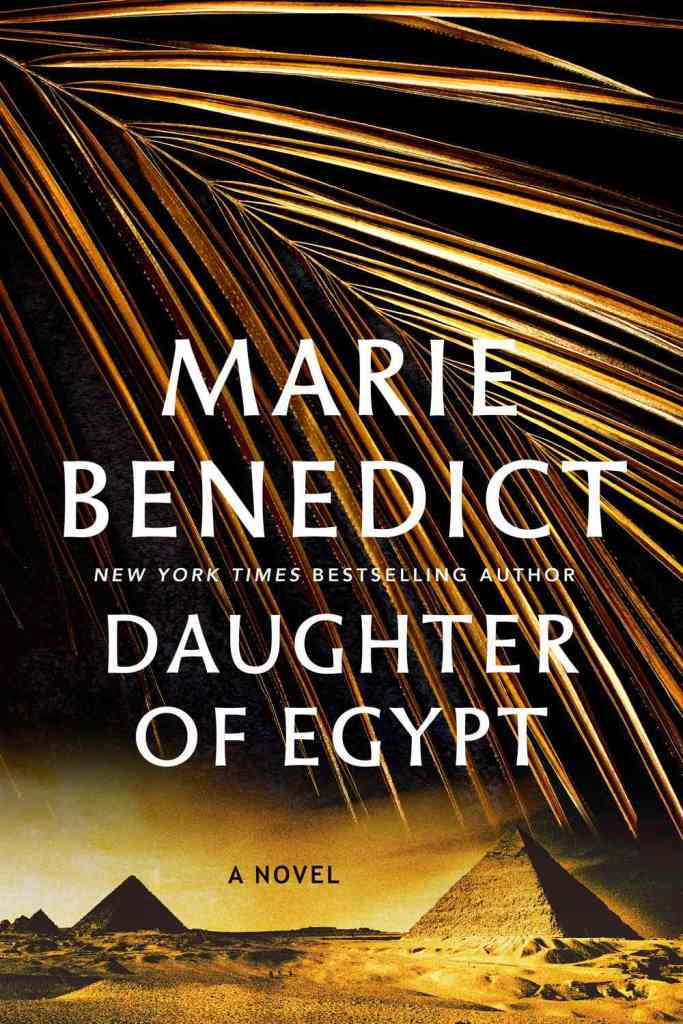
Daughter of Egypt by Marie Benedict
The daughter of an Egyptian pharaoh and the daughter of an English earl are the narrators of this dual timeline historical novel. I have read quite a few dual timeline novels, and I usually prefer the earlier timeline. In this case, I found the 1920s story of Eve, Lady Evelyn Herbert, more enthralling. It’s clear that author Marie Benedict has long been fascinated by ancient Egypt, and specifically Hatshepsut. Hatshepsut, a regent and co-pharaoh whose tomb was well hidden, had her name erased from many places in Egypt. Eve, the daughter of Lord Carnarvon of Highclere Castle, loves spending time at excavations in the Valley of the Kings with her father and Howard Carter in the early 1920s, though her mother just wants her to find a suitable Englishman and get married.
Hatshepsut’s life in the 15th century B.C., is full of ritual and ceremony, as she must praise the rising sun each day. Unexpectedly, she becomes the eldest living child of her father, Pharaoh Thutmose, and he prepares her to help lead Egypt after him, as regent for a young pharaoh. The Egyptian settings are vividly drawn in both time periods, and both young women have considerable challenges, expectations, and limitations. Carter makes an amazing discovery, and Eve and her father are there to enter what will become a world-famous tomb. The Stolen Queen by Fiona Davis is a readalike, and The Collector’s Daughter by Gill Paul also tells Eve’s story. The Amelia Peabody series by Elizabeth Peters may also appeal, along with Murder Among the Pyramids by Sara Rosett.
Brenda

